prologue
- The greatest mystery in American criminal history
- Demolition
- First Letter
- Calling himself Zodiac
- Arrival date and delivery address
- Statement of responsibility regarding the incident on October 11th
- Vietnam War
- Returning soldiers and California
- What did the Zodiac Killer want to achieve through these letters?
- What is the meaning of the code?
- Was the culprit the only one who knew?
- First letter (mailed July 31, 1969 / received August 1, 1969)
- judgement
- Second letter (received August 4, 1969: “Zodiac” letter)
- judgement
- Identification of the police station to which the officer belongs
- Differences and relationship between the sheriff’s office and the city police.
- Vallejo City Police
- Zodiac cipher type
- Presence or absence of puzzle-like elements
- What Zodiac wanted to do
- Forced codebreaking
- U.S. military cryptography
- Technical characteristics of the Zodiac cipher (Z408 / Z340)
- Similarities with the U.S. military’s field code and FM (Field Manual)
- “Police officer” as a job option for returning soldiers
- The tide of the times: a synergistic effect of social backlash, PTSD, and worsening public safety.
- Convergence towards the Zodiac statue
- Was the Lake Berryessa murder committed by the Zodiac Killer?
- If the perpetrator was the Zodiac Killer
- The true culprit’s intentions
- Summary of the incident
- A fatal blunder by the witness and the police.
- Original text of the letter
- Analysis of the letter
- Why was the Lake Berryessa incident ignored?
- Why didn’t you deny it?
- Narcissistic Rage in Narcissistic Personality Disorder (NPD)
- Comorbidity with antisocial personality disorder (ASPD) (malignant narcissism)
- The “reactive” psychopath aspect
- Asymmetrical games to maintain “absolute advantage”
- A cooling device that transforms emotional outbursts (narcissism, anger, healing) into an “intellectual structure.”
- Puzzles as a compensatory act for something that “cannot be denied”
- Summary and context of the fourth letter (Z340 encrypted transmission)
- The time when it was written
- Something felt off about the first four letters.
- Absence of motivation for writing the letter
- Puzzle deterioration
- conclusion
- Anger at the fifth letter
- The motivation behind the sixth action
- conclusion
- Suspect police involvement
- Using newspaper articles to provoke and incite
- Prioritizing maintaining security in California
- A house search conducted while the homeowner is away can be conclusive.
The greatest mystery in American criminal history
A series of murders that occurred in the San Francisco Bay Area of California in the late 1960s remains unsolved more than half a century later, and is recorded as one of the largest unsolved cases in the history of police investigations in the United States. The perpetrator, who called himself “Zodiac,” committed multiple murders while simultaneously sending self-made coded messages and threatening letters to the media. This case transcended mere violent crime and became one of the earliest examples of a theatrical crime with a wide-ranging scope that involved the media, police organizations, and the general public. The confirmed number of victims alone is five dead and two seriously injured, and the brutality of the crimes and their widespread nature caused an extremely serious breakdown and terror in the social system of the time.
Demolition
To prove the truth of a crime, it is necessary to eliminate emotional interpretations and excessive narratives attached to past records and return to the initial physical data and primary sources left at the crime scene. The essence of the case lies in the process of coldly comparing the consistency between the documents the perpetrator sent to the police and media and the objective facts presented therein. Subjective speculations and mythical labels that have been built up until now are stripped away, and the objective structure and physical facts of the case become clearly apparent.
The Zodiac Killer case
First Letter
On Friday, August 1, 1969, letters arrived simultaneously at the editorial offices of three major newspapers located in the San Francisco Bay Area of California: the San Francisco Chronicle, the San Francisco Examiner, and the Vallejo Times-Herald. These letters were handwritten in blue ink and were anonymous, with no sender’s name included. The letters explicitly claimed to be the perpetrators of two unsolved murders: the attack on a couple on Lake Herman Road in Venetia on December 20, 1968, and the attack on a couple in Blue Rock Springs Park in Vallejo on July 4, 1969.
The letters specifically listed the physical details of the crime scene and the detailed procedures of the crime, including information not publicly released by the police or media. Each of the three letters also had an attached sheet of coded text written in different symbols, and when the coded texts from the three letters were combined, a single coded message of 408 characters was completed. In these letters, the sender demanded that each newspaper publish the enclosed coded message on the front page by the afternoon of Friday, August 1, 1969. The letters contained a clear threat that if this demand was not met and publication was refused, the sender would indiscriminately target people in isolated suburban locations or in cars from Friday night through the weekend, killing a total of 12 people. The letters did not contain any justification for the crime, but were purely focused on listing the facts of the crime, demanding the release of the coded message, and giving advance notice of specific acts of killing that would be carried out if the demand was not met.
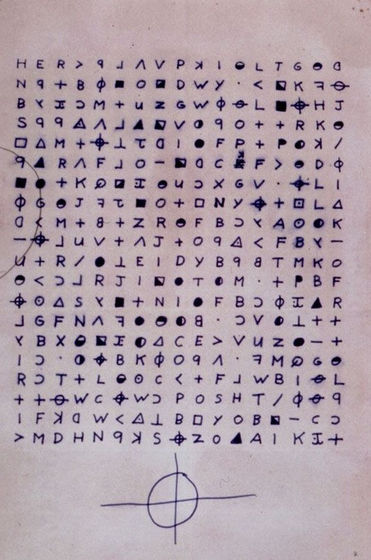
The details of the crimes described in the letters perfectly matched unreleased crime scene investigation data and physical evidence from the forensic department that had been kept by the investigating authorities. Regarding the December 20, 1968 incident, the letters accurately described the brand of bullets used in the pistol, specifically .22 caliber Super X rounds, the exact number of bullets fired at the scene (10), and the geometric arrangement of the positions and orientations of the male and female victims who were shot. Regarding the July 4, 1969 incident, the letters clearly stated the pattern on the clothing worn by the murdered female victim, the exact locations of the bullets fired into the bodies of the surviving male victim and the deceased female victim, and that the weapon used was a 9mm caliber Luger pistol. These facts were primary information that the investigating authorities had intentionally suppressed from the media, and were information that no third party other than the perpetrator could have known.
Upon receiving the letter and coded message, the designated newspaper published information about the letter and its contents to avoid immediate execution of the threat. This caused widespread panic among residents of the San Francisco Bay Area, directly impacting their daily lives and transportation. Furthermore, the mobilization of ordinary citizens, puzzle enthusiasts, and experts to decipher the code meant that society as a whole became entangled in the perpetrator’s theatrical intimidation tactics.
Detective Jack Stilts of the Vallejo Police Department, who was in charge of the investigation, issued a statement through the public press requesting additional proof from the sender of the letters in order to rigorously verify whether or not the sender was the real killer. While the police acknowledged that the contents of the letters were factual, they requested further details beyond information that any real killer would know, such as the exact condition of the victim’s clothing and the specific actions taken when leaving the scene. In response to this cautious and distrustful response from the police, the killer immediately responded, sending a second letter to the San Francisco Examiner on August 4, 1969. In that letter, the killer provided further details of previously undisclosed facts in response to the police’s request and began referring to himself as the Zodiac Killer.
The second letter
Calling himself Zodiac
On August 4, 1969, a second letter arrived at the San Francisco Examiner’s editorial office. The letter began with the sentence, “To the editors, this is Zodiac.” This was the first time the perpetrator defined himself by the proper noun “Zodiac” and officially used that designation to the outside world. From then on, the sender used this name as his identifier in all communications. The letter was written as a direct response to a demand made by Vallejo Police Inspector Jack Stilts through newspaper reports, asking for “additional proof that only the killer could have known.”
In the document, the perpetrator criticized the investigative capabilities of the police force and disclosed detailed, previously unreleased crime scene information regarding two past incidents. Regarding the Lake Herman Road incident on December 20, 1968, a physical description was given of how the buttons on the clothing of the murdered girl victim had come undone due to the bullet impact, and the specific angle at which the bullet penetrated her body. Regarding the Blue Rock Springs incident on July 4, 1969, it was specified that immediately after committing the crime, when the perpetrator himself called the police, he left the scene with the receiver of a public telephone in Vallejo hanging from the hook instead of returning it to its original position.

Furthermore, the text described the specific method and structure of the crime, stating that in order to maintain accuracy during nighttime attacks, a large flashlight was taped to the barrel of the gun used, and the target was illuminated while firing. At the end of the text, the author claimed that the reason the police could not arrest him was because his planning and knowledge surpassed the police’s investigative network, and he made a reference to the newspapers that had published the coded message.
The additional information described in the letter perfectly matched previously unreleased crime scene investigation records and forensic reports that had been kept strictly confidential by the investigating authorities. The extent of the damage to the victim girl’s clothing and the angle of the bullet’s penetration matched the records of the autopsy surgeon. Furthermore, the police call log recorded that the receiver of the public telephone used to make the call immediately after the crime was found hanging down. The description of how the flashlight was used during the night shooting also provided physical evidence to support the testimony of the surviving male victim who said he was “blinded by a bright light and shot at close range.” These descriptions completely proved that the sender was not a false person merely repeating police reports, but the real perpetrator who directly committed the crime at the scene.
Following the second letter sent on August 4, 1969, the sending of new letters and crimes by the Zodiac Killer temporarily ceased, entering a period of silence lasting approximately two months. This silence continued as an eerie period of stagnation until September 27 of the same year, when the next crime occurred, with law enforcement agencies and society as a whole maintaining a high level of vigilance for the next development.
Third letter
Arrival date and delivery address
On Monday, October 13, 1969, a letter was delivered to the editorial office of the San Francisco Chronicle, a major newspaper headquartered in San Francisco, California. The letter was mailed shortly after the shooting death of taxi driver Paul Strineer on the night of October 11, 1969, on a street in the upscale Presidio Heights neighborhood of the city. Analysis of the postmark on the envelope and the mailing route confirmed that the letter was mailed directly from San Francisco, the scene of the crime.
Statement of responsibility regarding the incident on October 11th
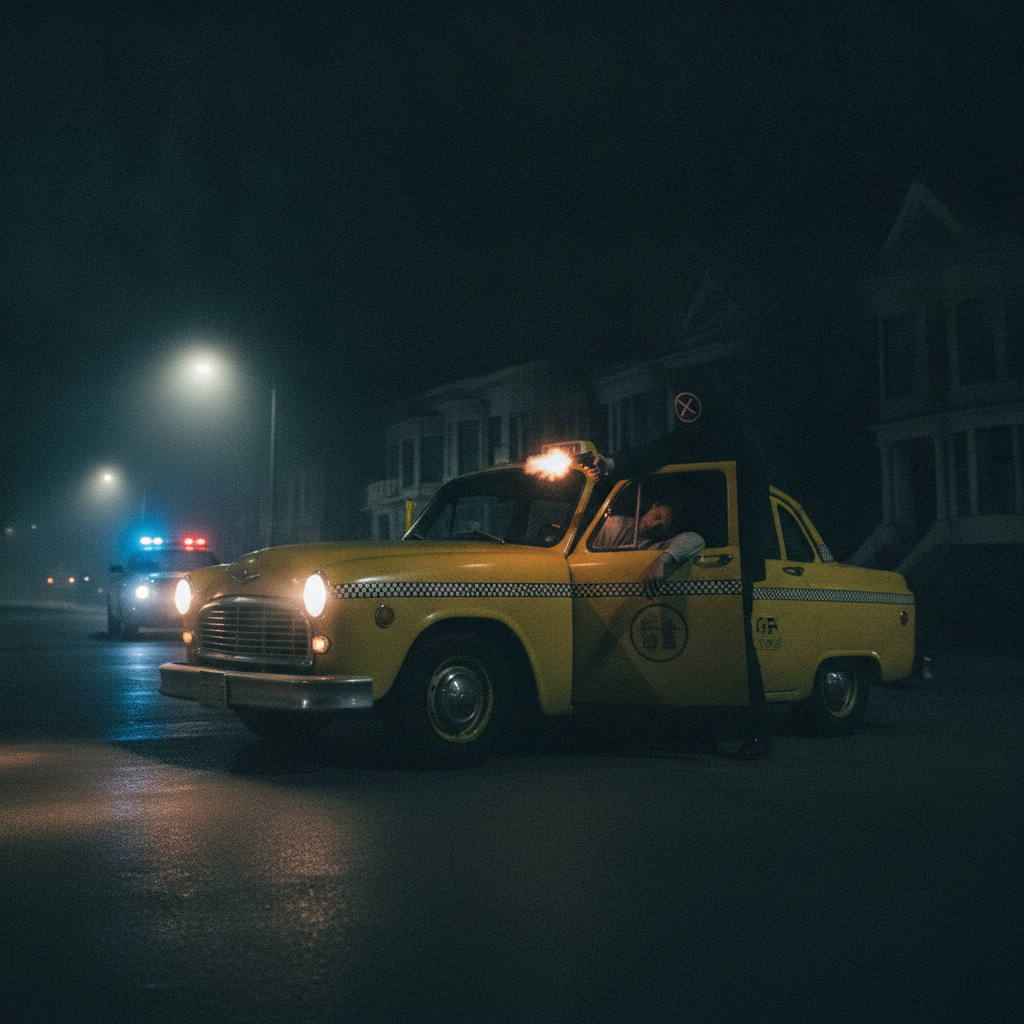
The letter was handwritten using a blue ink ballpoint pen and began with the standard greeting, “To the editor, this is Zodiac.” In the letter, the killer explicitly declared that he was the perpetrator of the murder of taxi driver Paul Strineer at the intersection of Washington Street and Cherry Street in San Francisco on the night of October 11, 1969.
The perpetrator described the direct process of the crime, stating that he boarded the victim’s vehicle as a passenger, and upon arriving near the designated destination, fired a 9mm pistol shot into the back of the head, killing the victim instantly. This description was detailed enough to be immediately cross-referenced with the findings of the crime scene investigation and the victim’s autopsy. The perpetrator not only stated that he had committed the crime, but also boasted of his ability to carry out his plan even in a heavily guarded urban area like the city center, and constructed a statement strongly asserting that his criminal territory had expanded from the suburbs to urban areas.
Inside the envelope of this third letter, along with the written message, was a piece of physical evidence directly cut from the body of Paul Strineer, the victim murdered at the crime scene on October 11. It was a piece of cloth, approximately 5 inches by 7 inches, directly cut with a sharp object from the back hem of the light blue cotton dress shirt the victim was wearing that day. The cloth was covered in a large amount of dried blood, and biochemical analysis by the forensic department confirmed that the blood type and protein type perfectly matched the victim’s own data.
Furthermore, a physical comparison of the cut edges of the fabric pieces with the damaged areas of the remaining shirt worn by the victim confirmed that they joined perfectly without any gaps. The inclusion of this physical evidence completely ruled out any false claims of responsibility and objectively proved to the police authorities that the sender was the real culprit who had direct contact with the victim’s body at the crime scene.
Historical context of the Zodiac Killer case
Vietnam War
From the mid to the end of the 1960s, the United States was in the midst of unprecedented social and political turmoil due to its full-scale intervention in the Vietnam War. Following the 1964 Gulf of Tonkin incident, direct U.S. military intervention intensified, and the number of soldiers deployed to the front lines rapidly expanded, exceeding 500,000 at its peak. The strengthening of the conscription system meant that those sent to the battlefield were primarily young men in their late teens and early twenties, who faced brutal irregular warfare and opaque combat conditions in the tropical rainforests of Asia. The prolonged and quagmire of the fighting not only resulted in numerous casualties on the ground but also triggered a large-scale anti-war movement within the United States. The broadcast of vivid images from the battlefield to homes across the nation through nightly news programs fostered intense public suspicion and distrust of the government’s military policies and statements. The draft avoidance movement and campus protests spread across the United States, solidifying a decisive resentment against traditional political power and state authority. The Vietnam War was more than just a foreign military action; it created a serious rift that divided American society’s value system and national identity, and acted as a structural factor that rapidly eroded public trust in the existing order and law enforcement agencies.
Returning soldiers and California
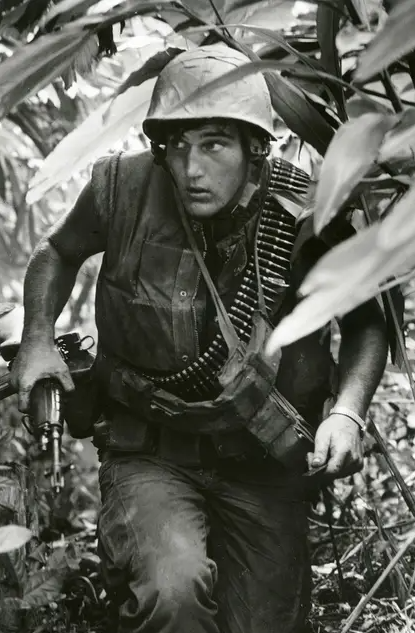
The presence of soldiers returning from the Vietnam War emerged as a particularly serious social problem in California on the West Coast. California’s warm climate, rapid urban development, and numerous major military bases and port facilities attracted a huge number of returning soldiers, serving as both a reception center and a place for a fresh start. However, many of these soldiers, exposed to extreme, potentially deadly stress and horrific violence on the battlefield, were released back into society suffering from severe psychological trauma, including what is known as PTSD.
At the time, public healthcare and social welfare systems for psychological care and recovery support were extremely inadequate, leading many returning soldiers to drug addiction, alcoholism, and social isolation. Furthermore, due to the intense anti-war sentiment within the country, returning soldiers were not welcomed as national heroes, but rather met with cold or even hostile stares from civil society. This social isolation and unprocessed trauma led some returning soldiers to deviant behavior and criminal tendencies, creating a potential risk in the California region of individuals with military combat training and weapons handling skills drifting aimlessly into urban life.
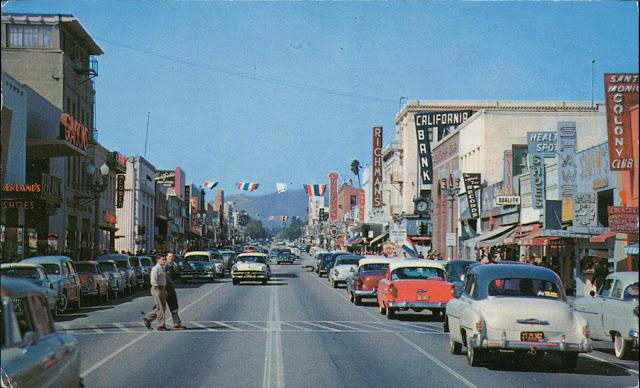
In the late 1960s, California, particularly the San Francisco Bay Area, experienced rapid urbanization, intensified social movements, and a significant decline in public safety during a transitional period, coinciding with the rise of counterculture. Countless young people from across the United States flocked to areas like Haight-Ashbury in San Francisco, which became a center of the hippie movement, leading to a proliferation of illegal drugs, a surge in vagrancy, and a breakdown of existing civic morality. Amidst this social turmoil, violent crime rates, including murder and robbery, showed a rapid upward trend.
The police, as investigative agencies, were forced to allocate enormous human and organizational resources to guarding against constant gatherings and riots, as well as to cracking down on the spreading drug crime, severely dispersing and compressing their ability to investigate individual murders and large-scale crimes. Furthermore, the formation of extensive urban suburbs exposed inadequate security measures on streets at night and in remote recreational areas, creating an urban structure where criminals could easily evade the police network. This decline in the overall ability of society to maintain public order and the saturation of investigative resources provided a backdrop that easily allowed perpetrators of heinous crimes to operate freely while seeking to escape.
Deconstructing the Facts
What did the Zodiac Killer want to achieve through these letters?
The primary objective pursued through the letters and the statements of responsibility contained within them was to concentrate the “highest attention” from society as a whole onto himself. Covert crimes that merely involve murder may cause local fear immediately after the incident, but as time passes, media coverage decreases and public interest rapidly fades away. In contrast, the act of writing the letters himself and sending statements of responsibility while presenting previously unreleased crime scene investigation data had the effect of instantly elevating the incident from a mere local news story to a theatrical serial crime that attracted nationwide attention. In the letters, the perpetrator proved the absolute reality of his guilt by describing the previously unreleased circumstances of the murders in detail, and then forced the media and police into dialogue with him by threatening to publish the story on the front page of newspapers and carry out the threats. When newspapers treated these letters and coded messages as top news stories every day and reported on their existence using entire pages, the perpetrator succeeded in keeping the attention of millions of readers glued to the text he presented. The letter, more than the tragedy of the incident itself, amplified the presence of the “message sender” lurking behind it, and functioned as the most powerful medium for exclusively drawing the attention of society as a whole.
Cryptography
The act of enclosing and presenting a coded sheet within a letter functioned as an irreversible command to compel law enforcement agencies and society as a whole to decipher it. Going beyond a simple written statement of responsibility, the presentation of a complex, symbolic puzzle mobilized the minds of the entire society—from police forensic investigators and FBI cryptography specialists to ordinary citizens and puzzle enthusiasts who saw the code in newspapers—into the deciphering process. By claiming in the letter that his identity was hidden within the code, the perpetrator instilled in society the compulsion that failure to decipher it would lead to another victim, or that deciphering it would solve the case. This forced society as a whole to adhere to the rules of the “code-breaking game” presented by the perpetrator, concentrating investigative resources and attention on the fruitless task of analyzing the code. The inclusion of the coded message was a physical mechanism designed to trap the collective thinking and computational abilities of society within the puzzle he had created, forcing the deciphering process itself upon them.
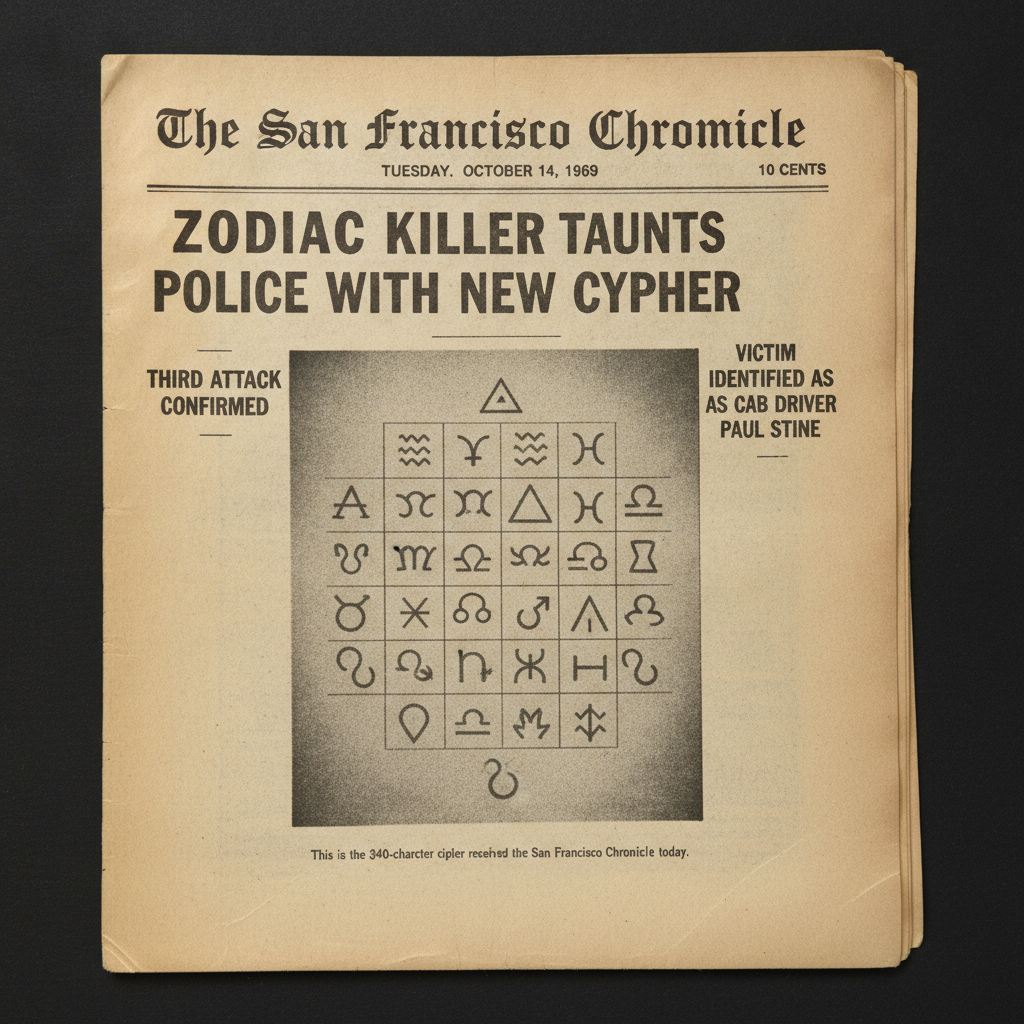
What is the meaning of the code?
The coded messages enclosed in the letters and presented to society and law enforcement agencies, after being deciphered with considerable analytical resources, turned out to contain “meaningless content” that was inversely proportional to the effort and mystery presented. When the first code (Z408), consisting of 408 characters, was deciphered, the text that appeared was a string of unique and paranoid claims about the pleasure of murder and the acquisition of slaves in the afterlife, and did not contain any specific personal identification data such as the perpetrator’s name, address, or date of birth, nor any logical information regarding future crime plans. The perpetrator had strongly encouraged the deciphering process by explicitly stating in the letter that “my identity is hidden in this code,” but the actual text contained no objective data that would directly advance the investigation, and all that was presented to the decipherers was an empty text. The same was true for the 340-character code (Z340) that was later deciphered; the information obtained after deciphering was limited to references to television programs and complaints about the police, and lacked any definitive truth or logical message. It was simply a matter of placing text with no objective value within the strict format of a cryptography.
contradiction
Was the culprit the only one who knew?
Examining the source and distribution channels of the information reveals how dangerous a logical leap it was to assume that “whoever knew about the crime is the perpetrator.” The collapse of this premise, which underpinned the investigation, is the beginning of the greatest contradiction in this case. Were the detailed data, such as the victim’s clothing, the nature of the bleeding, and the direction of the bullet’s trajectory—generally considered “exposure of secrets only the perpetrator could know”—truly exclusive information only known to the perpetrator who was at the scene? It remains questionable whether the perpetrator, under limited visibility and a tense time constraint at a crime scene that took place in darkness, could have accurately remembered such detailed and objective data. On the other hand, the data protected by the investigative authorities as “non-public information” was strictly managed as official records from immediately after the incident and stored within a specific organization. Therefore, the logic that immediately limits the sender to “the perpetrator at the scene” simply because they “have access to the non-public information written in the letter” is not valid. It is logically impossible to rule out the possibility that another party existed that could have possessed, viewed, or acquired that information.
In terms of access rights to information, it wasn’t just the perpetrator who possessed information about the crime scene; the “police officers” who rushed to the scene upon receiving the initial report and took charge of the investigation also held similar authority. From the moment the incident occurred, police officers were in a position to directly direct the preservation of the crime scene, the examination of the body, the measurement of bullet holes, and the collection of various kinds of evidence, and they had the authority to record and manage all physical conditions of the scene as objective data. Through forensic photographs, on-site investigation reports, and even autopsy reports by forensic scientists, police officers were able to collect and view more precise and comprehensive incident information than the perpetrator who was at the scene. While the perpetrator could only possess limited information about the crime scene, which took place in darkness, police officers were in a position to access complete data verified in a bright environment. Therefore, the fact that someone “knows unreleased crime scene information” does not prove that the sender is the perpetrator, but inevitably suggests the existence of another information holder, a police officer, who could obtain the same information equally, or even more, in detail. It wasn’t just the perpetrator who had exclusive rights to the information; people within the police organization also possessed that information.
Here, we will examine the differences in information between the perpetrator and the police officers and compare them to the present case. At the scene, there are absolute structural differences in the quality and accuracy of information that each party can obtain, stemming from their respective operational conditions and authority. We will analyze and compare the data held by the perpetrator, whose actions were confined to darkness, with that held by the police officers, who possessed official authority to control records.
In the case of the perpetrator
The modus operandi was repeated, and the same method was used.
When an perpetrator commits multiple crimes, they tend to exhibit unique behavioral patterns, specific weapons, or attack procedures based on past successful experiences. In a series of crimes committed by the same perpetrator, there is a clear consistency and commonality in the logic of their actions, from the methods used, the style of attack, the selection of victims, to the choice of escape routes. The standardization of methods is an essential element indicating that a single perpetrator is acting based on the same psychological motivations and physical techniques. If a crime is committed using methods or under completely different circumstances than in previous incidents, it cannot be explained from the perspective of consistency in the actions of the same perpetrator and suggests that heterogeneous factors different from conventional methods are involved. For the perpetrator, the adherence to methods is the very essence of behavioral reproducibility and serves as physical evidence that directly links to past behavioral logs.
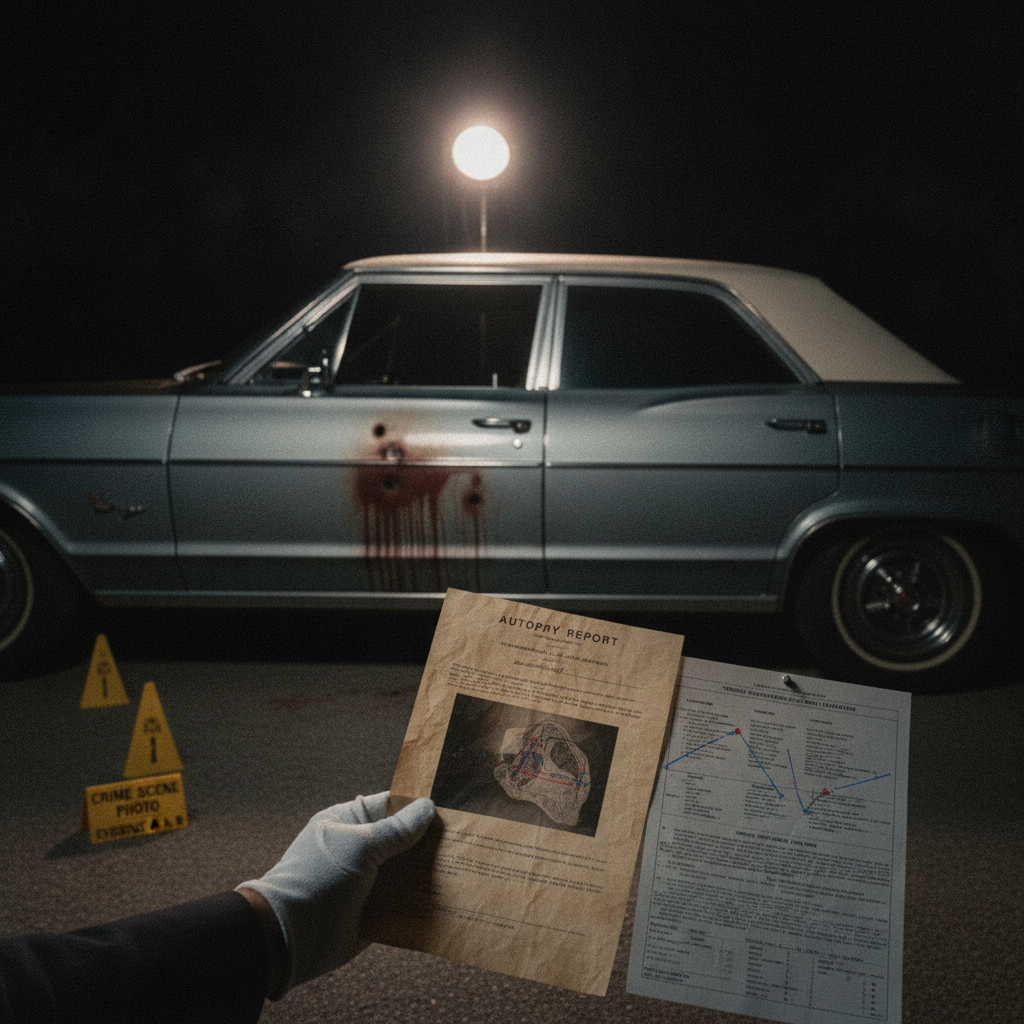
In the case of a crime committed at night, it is impossible to examine the details of the crime scene.
In crimes committed in dimly lit areas or outdoors at night, the physical limitations of visibility make it impossible for the perpetrator to visually grasp the minute details of the scene. In extreme situations dominated by the need for rapid escape and the fear of capture, it is realistically impossible for the perpetrator to precisely observe and remember the tiny seams of the victim’s clothing, the spread of bloodstains, the exact location of injuries on the body, or the detailed geographical layout of the surroundings. Information obtained from vision during a crime committed in darkness, lasting from a few seconds to a few minutes, is extremely fragmentary, and it is physically impossible to acquire detailed observational data that can be reproduced later as an objective description. Therefore, the information that a perpetrator can perceive at a nighttime crime scene is limited to subjective and limited information such as the sensations they directly touched and the general spatial relationships.
We can’t tell how the bullet penetrated or the angle of impact.
In crimes involving firearms, even the perpetrator who fired the shot cannot physically perceive or grasp the medical and ballistic details of how a bullet fired in darkness penetrated the victim’s body or how it damaged bones and tissues. Data such as the angle of incidence, the trajectory of the bullet within the body, the shape of the entry and exit points, and the identification of internal organs that were injured or killed are elements that can only be revealed through autopsy and precise measurements. At the moment the trigger is pulled at the scene, the perpetrator can only know that a shot was fired and the approximate location of impact; it is fundamentally impossible to obtain advanced data on internal damage, such as anatomical trajectory and penetration angle, solely from the scene.
In the case of a police officer
The method of the crime may differ, but that doesn’t matter.
For police officers in charge of investigations, it is not a problem if there is no similarity or consistency in the methods of crime, the circumstances at the scene, or the type of weapon used in individual cases. This is because they are not bound by their own successful patterns or specific behavioral norms like the perpetrators, and their role remains to integrate, organize, and analyze objective data and on-site investigation reports that have been compiled and collected as investigative materials, even for multiple different cases occurring in different locations. No matter how disparate the methods of crime at each scene may be, police officers can grasp and understand these events as a unified set of information by referring to the official records and evidence lists created for each case. While the consistency of methods is a point of contention in identifying the perpetrators, for police officers who record and access the information, the only issue is whether the data exists as an official document and is accessible, and differences in criminal style do not pose any obstacle to acquiring and retaining information.
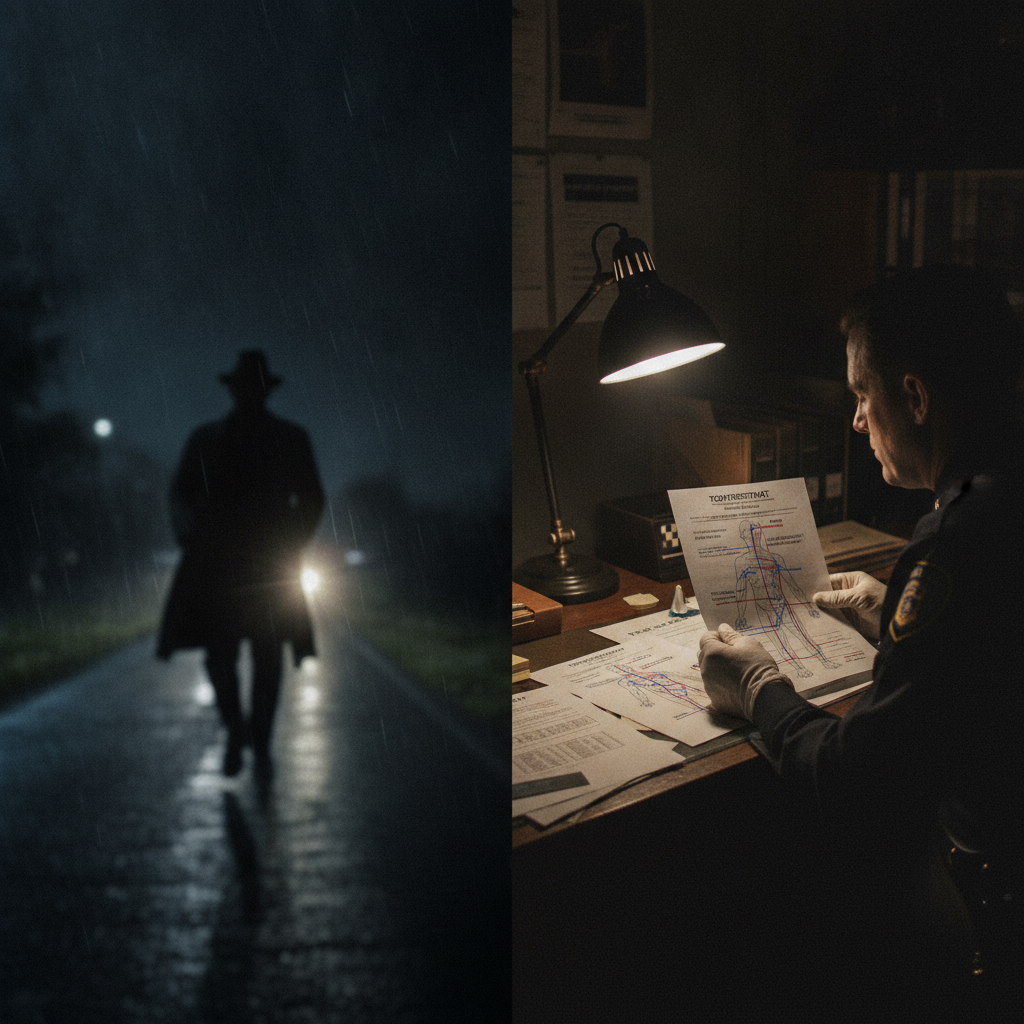
Even though the crime was committed at night, the evidence from the crime scene investigation is clear.
Even if a crime occurs in darkness without streetlights or outdoors at night, the investigating police officer can objectively and clearly grasp all physical details of the scene in a well-lit environment through precise on-site investigation using powerful lighting equipment, detailed on-site photography by forensic officers, and the creation of an on-site investigation report. In the on-site investigation process, detailed data that would be invisible to the perpetrator in the darkness, such as the disarray of the victim’s clothing, the direction of blood splatter, the placement of tiny pieces of evidence, and even footprints and tire tracks left on the ground, are meticulously measured, recorded, and compiled into visualized data. By reviewing these completed investigation materials and high-resolution on-site photographs, police officers can accurately grasp the full scope of the physical circumstances that occurred at the night scene with the same or even greater precision than if they had thoroughly observed the entire scene in clear daylight.
You can also learn things that are already known through dissection.
Police officers have the right to attend autopsies performed by forensic scientists or to officially view and refer to the detailed autopsy reports they create. This allows them to fully understand internal medical facts, detailed causes of death, and precise ballistic data that are impossible to ascertain through visual observation at the crime scene. Specifically, they are guaranteed access to objective data that can only be revealed through a forensic approach, such as the exact shape of the entry and exit points of the bullet into the skin, the angle of penetration of the bullet as it passed through the body, the degree of damage to bones and tissues, the extent of organ fragmentation, and the accurate estimated time of death derived from the contents of the stomach. Against the constraints of the perpetrator’s eyes and the darkness of the crime scene, police officers are in a position to fully obtain and retain extremely detailed case information, including the internal structure of the body, through the medical and scientific document of the autopsy report.
In conclusion, police officers have access to more detailed information than the perpetrator. While the perpetrator, trapped in the darkness of the crime scene with limited visibility and excessive tension, could only possess subjective and fragmented information, the police officers in charge of the investigation were in a public position to obtain more accurate, comprehensive, and complete information, from the physical details of the incident to anatomical data, through on-site inspection materials conducted under strong lighting, high-resolution forensic photographs, detailed on-site investigation reports, and autopsy reports by forensic scientists. The “unpublished crime scene data” mentioned in the letter was information that police officers, who had access to clear records, could grasp far more accurately and comprehensively than the perpetrator, who was in the darkness of the crime scene.
Identification from information
Were the descriptions of the crime scenes revealed by the Zodiac Killer in his two letters truly “secrets known only to the perpetrator”? When we objectively examine the source and distribution of information, the existence of highly organized data that goes beyond mere memory of the perpetrator emerges. Fragmentary visual information obtained under the harsh conditions of a dark crime scene and official data scientifically measured and recorded by forensic and investigative work. We must coldly analyze and compare the quality and scope of information that both can hold and attempt to identify the source of that information. It is essential to objectively verify each specific description in the letters and rigorously distinguish and identify whether it is based on the perpetrator’s subjective observation or on official records created by investigative agencies. Information always flows from the scene where it occurred to the place where it is stored, and by scrutinizing the precision and expression of the descriptions, it becomes possible to naturally identify the attributes of the holder at the source of the transmission route.
First letter (mailed July 31, 1969 / received August 1, 1969)
These are objective crime scene data presented by the perpetrators to prove their involvement in the attacks. In the two attacks, the Lake Herman Road incident on December 20, 1968, and the Blue Rock Springs incident on July 4, 1969, the letter writers listed extremely specific details of the crime scene as objective evidence to the police and the public to confirm their guilt. These descriptions consisted of confidential information, known as holdback information, which was not disclosed to the general media or residents at the time of the incidents. By presenting this unreleased crime scene data, the writers intended to demonstrate their unique access to the heart of the case and to fundamentally undermine the investigative capabilities of the police organization.
In describing the Lake Herman Road incident, the sender first specified in detail the position and exact orientation of the victim, Betty Lou Jensen, when she fell. It mentioned that she was lying on the ground with her right side down, and that both of her feet were pointing precisely towards a parked station wagon. Next, regarding the weapon and ammunition used, it clearly stated that the firearm used in the crime was loaded with “.22 caliber Super X” brand ammunition. Furthermore, it provided numerical data indicating that exactly 10 bullets were fired at the fleeing girl.
Next, in describing the Blue Rock Springs incident, the sender pointed out the visual fact that the victim, Darlene Ferrin, was wearing a dress and pants with a distinctive pattern on them on the night of the incident. Regarding the weapon and ammunition used, it was noted that, unlike the previous incident, “9mm caliber Western” brand ammunition was used. The procedure of the attack and the sequence of firing were also described in an extremely step-by-step manner, with a well-organized log of actions: first, the shooting began through the passenger-side window of a parked Chevrolet vehicle; after firing the first few shots, the sender left the vehicle to confirm that the victim was still alive, then returned to the vehicle to fire further shots; and finally, all the bullets loaded in the gun’s magazine were fired.

judgement
Even considering that the crime was committed at night, it can be determined that this information could have been obtained by both the perpetrator and the police officer. Examining the physical source and acquisition route of all items listed in the first letter reveals that they fully possess two aspects: “information that the perpetrator, who was directly present at the scene, could have memorized through subjective experience and direct sight and touch,” and “information recorded and retained as objective figures and photographs through on-site investigations, forensic work, and on-site examinations conducted by official investigative agencies immediately after the incident.” At the stage of this first letter, the content of the data held by both parties completely matches, and it has not reached an exclusive area of information that only one of them could have known.
Second letter (received August 4, 1969: “Zodiac” letter)
This document contains additional details, including penetration, ballistic, and anatomical data, provided by the perpetrator in response to an official demand in the newspaper by Vallejo Police Chief Jack E. Stilts, who asked the sender to “prove, if the sender is the real killer, proof of previously undisclosed crime scene details known only to the police.” In this document, received on August 4, 1969, the sender identified himself for the first time as “Zodiac” and, in response to the police challenge, presented even more advanced and detailed physical data of the crime scene than in the previous letter. The information presented here clearly distinguishes itself from the superficial crime scene data seen in the first letter, and includes highly specialized and secretive scientific data such as the extent of internal bodily damage to the victim and the precise trajectory of the bullet.
As an additional account of the Lake Herman Road incident, the sender described how the bullet fired from the back of the fleeing victim, Betty Lou Jensen, passed through her body and completely penetrated to the outside. Furthermore, the sender went beyond simply stating that the bullet had penetrated, providing detailed information about the three-dimensional trajectory of the bullet inside the body, describing the oblique angle (penetration trajectory) it took as it pierced through organs and tissues.
As additional information regarding the Blue Rock Springs incident, the sender pointed out the physical fact that when a shot was fired at close range through the passenger-side window, the bullets fired penetrated the bodies of both victims (Mike Magor and Darlene Ferrin). Furthermore, they described a multi-layered penetration process in which the bullets, after penetrating the human body, maintained their kinetic energy, pierced through the seat cushions inside the car, and finally penetrated and hit the metal panels and door frames of the vehicle. They also presented precise data on the specific height and relative position of the muzzle at the point of firing when the shot was fired through the passenger-side door and window, as well as the exact entry angle and direction of incidence of the bullets that were fired in a straight line into the bodies and inside the car.
These descriptions, particularly the “state of bullet penetration” and “angle of entry and penetration” recorded in the second letter, are data that the perpetrator, who pulled the trigger in the darkness of night, could not possibly have perceived with the naked eye. They perfectly match the autopsy report and the forensic ballistics report.

judgement
The detailed data in the second letter is information that the perpetrator could not have known and can only have been obtained by a police officer. When the physical and forensic data included in the second letter is objectively examined, it completely exceeds the limits of memory that the perpetrator, who was at the scene at night, could have acquired through their own sight and sensations. When considering the crime environment, the biological structure of the human body, and the irreversible nature of ballistics in this case, it is logically proven that the source of this information could not have been the perpetrator at the scene, but rather the official documents themselves: the “autopsy report” prepared by the forensic pathologist who performed the autopsy and the “ballistic analysis report” prepared by the forensic department.
If the information holder is a “police officer,” and they are a police officer belonging to the police station in charge of the case, or to an investigative agency in the surrounding area, it would not be difficult for them to enter the investigation headquarters’ archives or the officer’s desk during working hours or off-duty at night and open binders containing the “Lake Herman Road Incident Autopsy Report” or the “Blue Rock Springs Incident Forensic Report.” For a police officer, the text and numerical data written therein, such as “penetration from the back,” “angle of oblique penetration,” “penetration through the vehicle’s metal body,” and “relative height of the muzzle,” are in the same format as official documents they see daily in their work, making it extremely easy to transcribe them into the text of a letter.
Thus, the conclusion drawn from a thorough examination and analysis of the descriptions contained in the second letter is extremely clear. While the information found in the first letter was “shared data between the perpetrator and the police officer,” the sophisticated scientific data presented in this second letter—such as “internal penetration state,” “three-dimensional oblique penetration angle,” “multiple penetrations into the metal parts of the vehicle,” and “muzzle position and firing angle determined by forensic measurements”—is “exclusive data reserved for police officers (or those holding the investigative materials)” that could never have been generated by the sensory organs of the perpetrator who was in the dark at the scene. When we comprehensively consider the physical limits of information generation, the conditions for a forensic autopsy to be valid, the technical process of forensic ballistic analysis, and the structure of information management within the police, the only logically and scientifically justifiable conclusion is that the sender of the second letter’s source of information was the police’s official investigative materials themselves, and that the police officer who had direct access to those materials was the true holder of the information in this eerie letter.
The Zodiac is a police officer.
Through the verification of the sources in the previous chapter, it was demonstrated that the precise data from the autopsy and on-site investigation reports presented in the Zodiac Killer’s letters could never have been generated from the subjective memory of the perpetrator in the darkness of the crime scene, and could only have been obtained by someone who had direct access to the official investigative materials themselves within the police organization. Now that the fact that the sender of the letters was a police officer has been logically and scientifically established, the next task to be clarified is to identify the structural location of which administrative agency and police organization he belonged to. By coldly examining the institutional framework of police organizations in the United States in the late 1960s, the strict division of jurisdiction, and the laws and practices regarding restrictions on access to administrative documents, we will attempt to identify the specific police organization to which he belonged.
Identification of the police station to which the officer belongs
In examining the locations of the incidents and the distribution of investigative authority, we will review the physical and institutional arrangements of the police departments in charge of the two serial attacks for which the Zodiac Killer initially provided undisclosed data in his letters. The first incident, the Lake Herman Road attack, occurred on December 20, 1968. The area along Lake Herman Road where the incident took place was an unmunicipal area not belonging to any specific city or municipality, and administrative and law enforcement jurisdiction rested solely with the Solano County Sheriff’s Office. Therefore, the initial investigation, on-site examination, forensic work, and attendance at and reporting of the autopsy were all directly carried out and managed by investigators and forensic officers of the Solano County Sheriff’s Office.
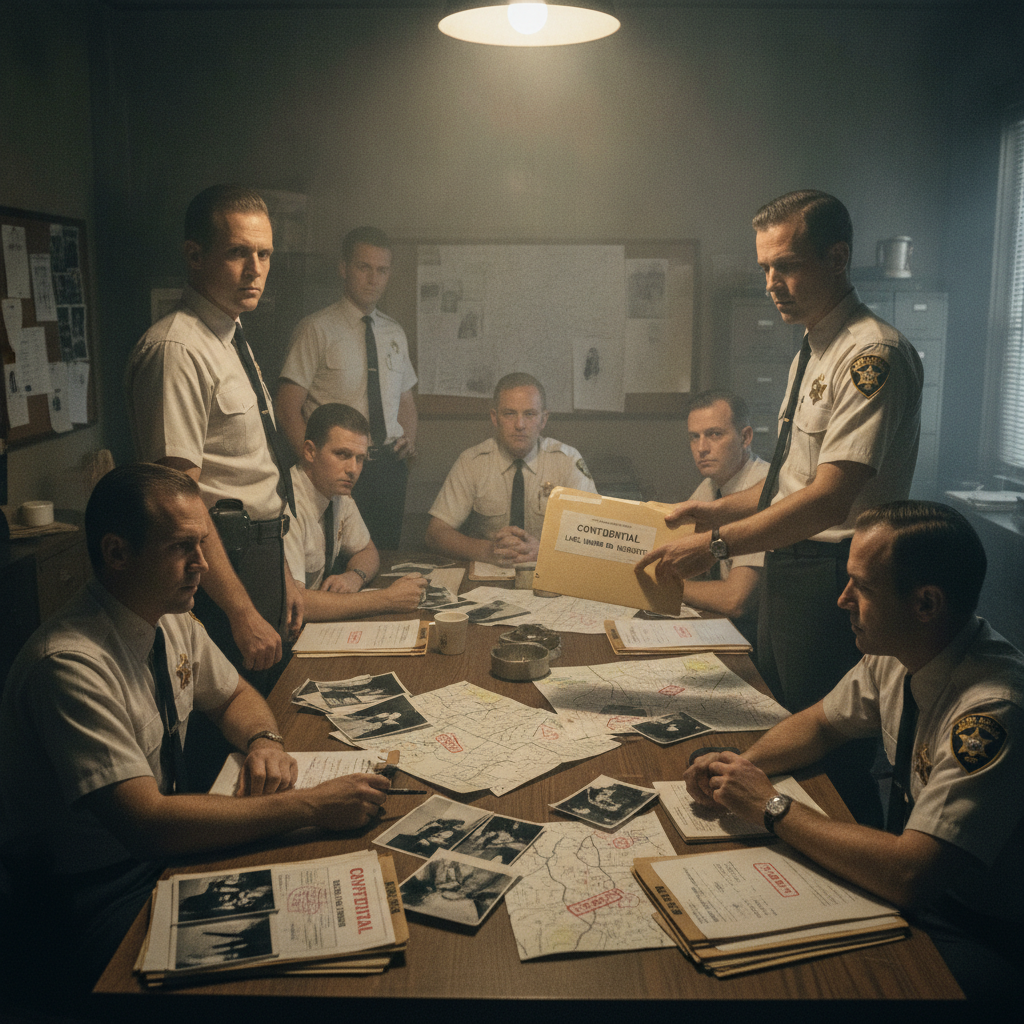
The second incident, the Blue Rock Springs incident, occurred on July 4, 1969. The parking lot of Blue Rock Springs Park, the scene of the crime, is located within the administrative district of Vallejo, and its law enforcement jurisdiction rests with the Vallejo Police. In this incident, the Vallejo Police took the lead in conducting the on-site investigation, interviewing the survivor, Mike Magor, examining the shell casings and vehicles left at the scene, and managing the autopsy procedures.
The fundamental question here is how a single information holder, the Zodiac Killer, could have simultaneous and complete access to both the autopsy reports and on-site investigation reports from both cases—top-secret documents created and managed separately by these two different law enforcement agencies. Considering the information security systems and jurisdictional independence within police organizations in the 1960s, it was institutionally impossible for ordinary police officers belonging to third-party police agencies such as the San Francisco Police Department (SFPD), the Napa County Sheriff’s Office, or the Oakland Police Department to access these undisclosed investigation files within Solano County.
The American law enforcement system is highly decentralized under the federal system, with municipal police (city police) and county police (sheriff’s offices) functioning as completely independent and separate administrative entities. Police officers from other cities or counties have neither the legal authority nor the physical opportunity to access the internal archives or locked investigation files of other departments regarding unsolved cases that occurred outside their jurisdiction, unless they have legitimate official investigative authority or a request.
Differences and relationship between the sheriff’s office and the city police.

To understand how the Zodiac Killer gained access to undisclosed documents in both cases, it is necessary to examine the institutional differences between the county sheriff’s office and the city police, as well as their geographical and practical collaborative structures. The county sheriff’s office has jurisdiction over the entire county, a broad administrative area, and is primarily responsible for maintaining law and order in areas not incorporated into local government, security for the local court, and management of the county jail. In contrast, the city police (Police Department) is a local government agency specializing in maintaining law and investigating crimes within the city boundaries of a specific legal entity. The two are clearly distinguished in terms of the scope of their authority and organizational nature, and in principle, their daily police operations and organizational management are operated completely independently. However, in the event of widespread and serial serious crimes, a unique framework for investigative cooperation and information exchange is established between these independent agencies. When the Lake Herman Road case occurred in December 1968 under the jurisdiction of the Solano County Sheriff’s Office, the scene was located in the suburbs very close to the border of Vallejo City. Therefore, due to their geographical proximity, a communication system for information sharing was established between the two agencies from the initial stages of the response. Furthermore, when the Blue Rock Springs incident occurred in July 1969 under the jurisdiction of the Vallejo Police Department, the similarities in the attack methods and geographical proximity raised the possibility that both incidents were committed by the same person.
In response to this situation, the Solano County Sheriff’s Office and the Vallejo Police Department established a joint investigative meeting that transcended the boundaries of their respective jurisdictions, and exchanged investigative information. In the process of this official investigative cooperation, copies and duplicate files of the “Lake Herman Road Incident Autopsy Report and Crime Scene Photographs” prepared by the Solano County Sheriff’s Office were formally transferred and provided to the Vallejo Police Department’s investigation headquarters. At the same time, the “Blue Rock Springs Incident Crime Scene Investigation Report, Forensic Photographs, and Mike Magor’s Statement” prepared by the Vallejo Police Department itself were also centralized and stored in the same location as investigative files within the police department. Analyzing this situation from the perspective of information transmission routes reveals some important facts. While ordinary deputies belonging to the Solano County Sheriff’s Office had access to the files for the Lake Herman Road case, which was under their jurisdiction, their authority to routinely and comprehensively access detailed crime scene investigation and autopsy data for the Blue Rock Springs case, which was primarily managed by the Vallejo Police Department, was limited. In contrast, the case files located in the Vallejo Police Department’s internal investigation headquarters contained both all the data from the Blue Rock Springs case, which their office handled, and the complete investigative materials for the Lake Herman Road case, which were provided through information disclosure from the Solano County Sheriff’s Office, all integrated into a single physical space.
Vallejo City Police
The only answer is the Vallejo Police Department. This is because there was no other place besides the Vallejo Police Department’s internal investigation headquarters where all the forensic autopsy reports, crime scene photographs, and ballistic analysis reports related to the two attacks were physically collected and stored as a single, complete set of files. In light of the strict administrative and legal principles of information segregation, officers from other police departments, including the San Francisco Police Department, were immediately ruled out as potential sources, as they completely lacked the authority to access undisclosed case data within Solano County as of August 1969. Similarly, while officers from the Solano County Sheriff’s Office possessed their own data, they were not institutionally in a position to have complete access to the detailed forensic reports and autopsy data of the second case, which were exclusively handled and compiled by the Vallejo Police Department.

The unreleased data from both cases intersected and were centrally organized and stored in the same shelves and binders at the Vallejo Police Department’s investigation data room and headquarters. Only police officers belonging to this police station could have simultaneously viewed the autopsy and forensic reports from both cases, either during work hours or off-duty time, and accurately transcribed the highly confidential figures such as “angle of oblique penetration inside the body,” “penetration through the vehicle’s metal body,” and “muzzle height and angle of incidence” into the letters. Therefore, the administrative and physical location of the person who possessed the advanced forensic and forensic data presented in the first and second letters as a source of information and was able to disseminate it externally can only be identified as a police officer working for the Vallejo Police Department. This conclusion, derived from a cold and hard examination of jurisdictional boundaries, the actual state of public document storage, and the flow of information disclosure between law enforcement agencies, is an absolute organizational fact that leaves no room for any objection in unraveling the true nature of the Zodiac Killer case.
Was the Zodiac Killer the real killer or an imposter?
If the Zodiac Killer was a serving police officer with access to investigative information, theoretically, it cannot be ruled out that he himself was the one who fired the shots at the scene. However, an analysis of the discrepancies between his actions in each case and the information contained in the letters suggests that this possibility is extremely low. The following is an examination of each stage.
When a criminal seeks to prove their guilt and assert their existence to society and law enforcement, the most reliable and swift means is to present physical evidence, such as the victim’s belongings or body parts, obtained directly from the crime scene. In gun attacks, taking the victim’s belongings (wallet, identification, watch, jewelry) or bloodstained pieces of clothing and enclosing them in a letter makes for the most irrefutable proof of guilt. In the first and second letters, sent between the end of July and the beginning of August 1969, the Zodiac Killer devoted considerable space to proving his guilt.
However, as mentioned earlier, all the information he presented consisted solely of written and numerical data. Not a single piece of the victim’s belongings or physical evidence from the crime scene was included. This behavior is highly unnatural from a behavioral science perspective, especially considering he claimed to be the real killer and was pressuring newspapers to publish his letter. If he had actually pulled the trigger at the scene, cutting off a piece of the victim’s clothing or removing their identification from their pocket at the moment of the murder would have taken only a few seconds. He could have easily convinced the police and newspapers by obtaining evidence at the scene and including it in the letter. If he had obtained physical evidence himself, presenting it would have been the safest and most reliable way to get his demands met. Nevertheless, the method Zodiac chose was an extremely roundabout and uncertain one: writing down highly analytical data found in top-secret police documents. Presenting information in writing, no matter how meticulous, leaves room for suspicion of information leaks or fabrications by insiders.

The reason he deliberately stuck to the least effective method of “presenting only textual information” is not because he didn’t want to present physical evidence, but because it was impossible from the start. In the later Presidio Heights case (the fourth case), a piece of the victim’s blood-stained shirt was immediately enclosed with the letter. This fact proves that the Zodiac Killer fully understood the value of using physical evidence to prove his guilt. The fact that the presentation of physical evidence, which was possible in the fourth case, was not done at all in the first and second cases indicates a fundamental difference in the criminal process between the two cases. No physical evidence was in the Zodiac Killer’s possession at the stage of the first and second cases.
The reason no physical evidence was presented in the first and second letters is that the Zodiac Killer was not the perpetrator of these crimes and never set foot in the crime scene. It is physically impossible for someone who was not present at the scene to possess the victim’s belongings or bloodstains. All he possessed were paper investigation files stored in the police station’s archives, not any materials from the crime scene. Because the only weapon he had at his disposal was written data, he had no choice but to process it, add codes, and send it to prove his involvement in the crimes. The lack of physical evidence indicates that he was a third party within the police force, located far from the crime scene.
The Zodiac and Cryptography
Cryptography is, in essence, a form of information transmission used for the transmission of specific information. Historically and structurally, the elements necessary for cryptography to function can be broadly classified into the following four points.
Maintaining confidentiality
means protecting data and information that could be detrimental if deciphered by a third party, and striving to maintain confidentiality.
To conceal information, intentions, or operational plans from an enemy
or adversary, thereby preventing its acquisition.
Communicating with Allies:
Ensuring that the intended message is delivered only to specific recipients (allies) who share common keys and procedures.
The puzzle-like element
lies in the fact that the process of deciphering a set of symbols constructed according to certain rules itself contains aspects of entertainment and intellectual trial and error.
Zodiac cipher type
The contents of two representative messages (Z408 and Z340) from the deciphered Zodiac code are as follows:
In Z408, a message was found to the effect of, “I like killing because it’s more fun than hunting wild animals in the forest. Humans are the most dangerous animals. After death, I will be reborn in paradise, and the people I kill will become my slaves. I won’t tell you my name because it would hinder my ability to gather slaves.” In Z340, deciphered in 2020, the message stated, “It wasn’t me who appeared on television talking about me. I’m not afraid of the gas chamber because it will only hasten my arrival in paradise. I have enough slaves.” Upon examining these deciphered messages, it becomes clear that they contain no “classified information that needs to be protected” for military, political, or criminal purposes. There is no data of substantial value such as specific future crime plans, the organizational structure of the criminal group, or the location of funds or weapons that need to be kept secret; instead, they only express subjective delusions and rebuttals to media claims. Therefore, the Zodiac codes were not intended for secrecy.
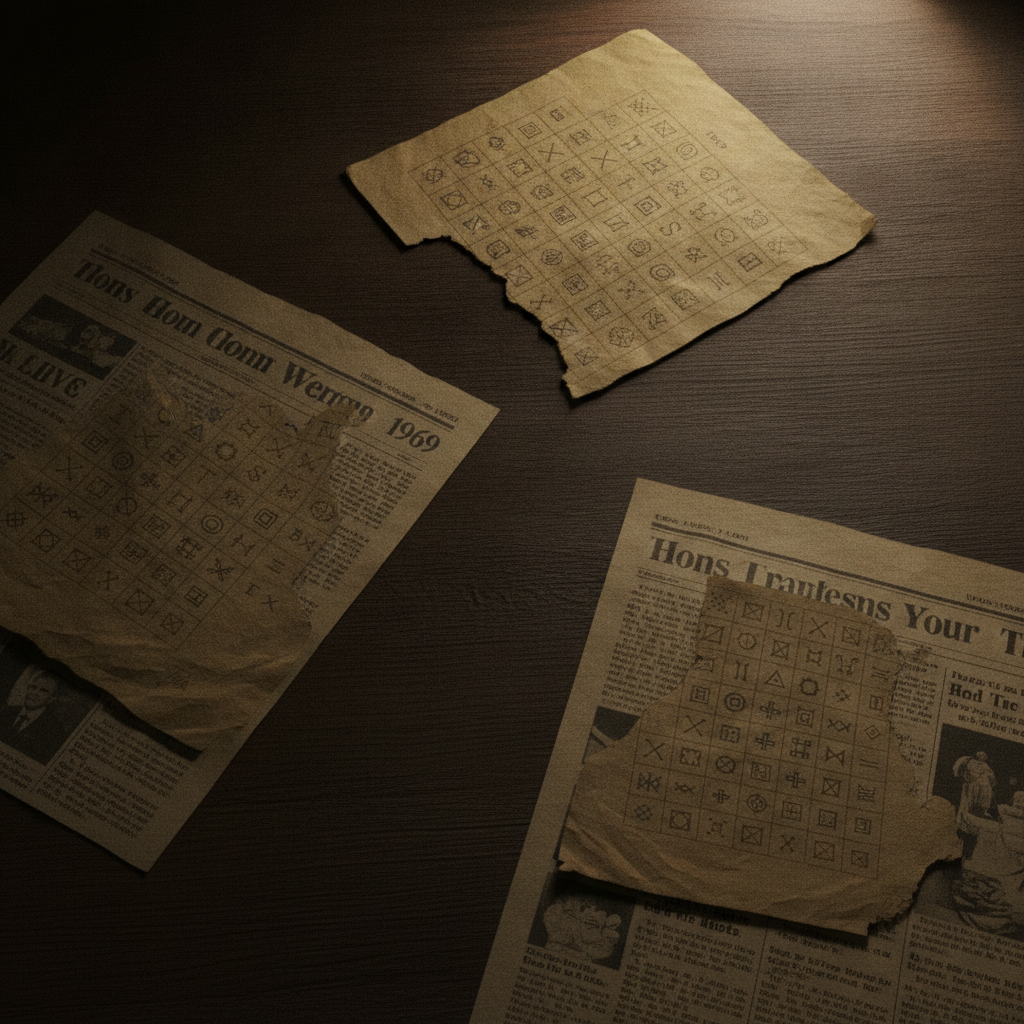
When cryptography is used in military or diplomatic contexts, it is assumed that there is a clear “ally” between the sender and receiver. However, in the Zodiac case, there is no “ally” or “accomplice” who is supposed to receive the encrypted messages, decrypt them, and then take specific actions. The recipients are all newspapers and police agencies, which are open to the general public. Furthermore, even if we assume that the police authorities and the public are the “enemies,” there is no attitude of concealing or hiding information from the enemy. Rather, the killer actively demands that the messages be decrypted, claiming that he will carry out additional murders if the messages are not published. In other words, he does not take a stance of hiding the content from the enemy, but rather a stance of forcing the decryption itself. In this structure, there is neither an enemy to whom the messages should be kept secret, nor an ally to whom they should be transmitted.
Presence or absence of puzzle-like elements
When there is no confidential information to protect within a cipher, and no allies to communicate with or enemies to conceal, the function of the cipher is purified to a “puzzle-like meaning .” In a crossword puzzle published in a newspaper, the arrangement of words and symbols that appear after completion has no social practicality or informational value. What is important to the decipherer is the “deciphering process” itself, which involves fitting symbols according to the given squares and conditions to arrive at the correct answer. The Zodiac’s Z408 and Z340 have similar properties. Z408 uses a simple substitution cipher form, replacing letters with other symbols, while Z340 incorporates a complex transposition and substitution structure, rearranging the arrangement of symbols by moving them diagonally. The sender assembled these sequences of symbols to generate the process itself of the decipherer discovering the regularity of the symbols and filling in the grid. The content of the words contained in the ciphertext is merely an “answer code” for deciphering, and the meaning content itself is not important. The focus is not on the content of the text, but solely on the interaction of presenting a difficult-to-decipher board and having the user solve it. This structure is not a practical cryptographic technique, but rather an intellectual puzzle presented based on rules.
Historically, cryptography has developed as a system for practical purposes such as “maintaining secrecy,” “concealing information from the enemy,” and “transmitting information to allies.” However, the series of symbols sent in 1969 by the person calling himself the Zodiac Killer contained none of these practical elements. The decoded text contained no primary information to be kept secret, there were no allies to share the secret with, and there was no intention to conceal information from the enemy. The presented ciphertext was a “board with decryption instructions” thrown out into society from the sender’s own safe zone, and was essentially nothing more than a puzzle structure using language. Therefore, it can be concluded that the series of texts and symbols that the Zodiac Killer sent to the police and newspapers were not ciphers as a means of information transmission, but rather a “puzzle” constructed for the purpose of decryption itself.

What Zodiac wanted to do
Despite not being the perpetrator of the crime, the individual (the Zodiac Killer) misused internal police documents to impersonate the perpetrator. What was he truly trying to achieve through his series of actions? By contrasting his actions with typical criminal motives such as demanding money or creating social chaos, this study examines the uniqueness of his behavior and his true intentions.
In extortion cases and theatrical crimes, the most common motive presented by the perpetrator is the demand for money or valuables. However, none of the early letters and codes that the Zodiac Killer sent to police agencies or newspapers contained any requests for payment of money or goods. Obtaining economic gain, such as demanding ransom or extorting money from specific companies or organizations, can be completely ruled out as a motive for his actions. The letters contained extreme threats, such as “If the code is not published on the front page of the newspaper, I will carry out indiscriminate killings over the weekend.” It is true that this warning caused intense fear and confusion in civil society and law enforcement agencies. However, if his main objective was to “instill fear in the public” or “disrupt the social structure,” he could have achieved this simply by impersonating the perpetrator of the crimes and sending provocative murder threats and letters mocking the police. There is no rationale for creating a code composed of complex sequences of symbols and sending it along as a means of causing panic in society. Fear can be created with the threatening letter alone, and the existence of the code is not an essential element in achieving the objective of causing social chaos.
Forced codebreaking
The code (Z408) that the Zodiac Killer presented in his first letter was deliberately divided into three parts and sent to different newspapers. He then threatened to carry out murders unless all three newspapers published the code, forcing all agencies to disclose it. Furthermore, he explicitly stated in the letter that “my identity (name) is contained within this code,” providing a clear motivation for the recipients to decipher it. Whether it was a demand for money, social disruption, or simply harassment of the police, there was no need to present a code that would require considerable effort to decipher in order to achieve his objectives. Nevertheless, he was obsessed with forcing the entire society to decipher it, even going so far as to divide the code into three parts, distribute it to the media, and reveal that his name was included in it.

A close examination of the Zodiac Killer’s actions reveals a structure that cannot be explained solely by conventional criminal motives such as acquiring money or simply creating social unrest. If he were to achieve those objectives, the existence of the cipher, which was painstakingly constructed over time, would be redundant and unnecessary. However, he showed a strong obsession with “sending the cipher” and “deciphering it,” which should have been merely a means to an end. Distributing the messages to three companies, forcing publication, and motivating recipients by claiming their identity was included—all his actions were focused on “making the presented puzzle solve” for the recipients and society as a whole. Therefore, it can be concluded that his primary objective, even to the point of impersonating the killer, was the process of presenting the puzzle he created to society and having it deciphered. The cipher was not a secondary tool to achieve his objectives; the deciphering of the cipher itself was the core of his actions.
The Vietnam War and cryptography
The communications warfare in the Vietnam War differed significantly from the large-scale, organized codebreaking battles seen in World War II, instead evolving in the extreme environment of the tropical rainforest and coinciding with the dawn of electronic warfare and communications intelligence (SIGINT). In the vast jungle battlefields where regular and guerrilla forces were intertwined, the disruption of communications directly led to the isolation and annihilation of troops, making rapid and mobile field-level cryptography operations a top priority. While the US military attempted to locate enemy forces by employing communications interception and location tracking technologies, the North Vietnamese and Viet Cong also exploited the incomplete communications environment, engaging in a gritty information warfare by analyzing US frontline communications tactics to anticipate operational movements. Rather than large-scale codebreaking exchanges, the era was dominated by small-scale information defense and struggles on the front lines.
U.S. military cryptography
Although the U.S. military had inherited the sophisticated mechanized cryptography system it had built during World War II, it was unsuitable to use the heavy, cumbersome encryption equipment in the swamps and jungles of Southeast Asia for guerrilla warfare. In field operations, carrying and maintaining large, highly classified encryption devices was difficult, with frequent malfunctions due to moisture and mud, and battery drain problems. While electronic encryption devices such as the KW-7 were used between large facilities and divisional-level headquarters, manual encryption procedures prioritizing portability and speed became essential at the platoon and squad level operating on the front lines. Therefore, the U.S. military incorporated manual encryption procedures, such as one-time pads and substitution/transposition ciphers that could be executed with only paper and pencil even in situations where communication equipment was unavailable or in emergencies, into the entire military’s training curriculum, providing thorough instruction to non-commissioned officers and soldiers.

Technical characteristics of the Zodiac cipher (Z408 / Z340)
Z408
The first cipher (Z408) presented by the Zodiac in August 1969 employs a homophone substitution cipher structure, assigning multiple different unique symbols or signs to each letter of the alphabet. It is designed to be difficult to decipher through simple character frequency analysis by smoothing the frequency of occurrences of specific characters, and is a classic example of a manual cipher constructed using paper and pencil according to certain conversion rules.
Z340
The second cipher (Z340), presented in the same year, employed a dual structure: in addition to character substitution, it also involved transposing the order of symbols according to a specific rule. It incorporated a complex transposition algorithm that placed symbols on a 17×20 grid and arranged characters by skipping them along the diagonal lines based on a specific movement rule. This resulted in a complex, dual-layered grid that went beyond simple symbol substitution.
Similarities with the U.S. military’s field code and FM (Field Manual)
The technical approach used by Zodiac in creating Z408 and Z340 perfectly matches the manual cipher creation procedures described in field manuals (such as FM 24-18 “Field Radio Techniques” and FM 32-5) that the U.S. military issued as training manuals for non-commissioned officers and soldiers from World War II to the Vietnam War. In basic training and field communications education within the U.S. Army, Navy, Air Force, and Marine Corps, procedures for “substitution and transposition (grid) ciphers that can be created with just paper and pencil” were taught as standard manuals for field ciphers at the platoon level where special electronic cipher machines were not available. The manuals meticulously specified, with diagrams, the specific creation process, including the transposition method which involves distributing letters according to specific skipping rules using a grid of squares, and the use of homophone substitutes to avoid frequency analysis. Furthermore, the symbols used by Zodiac in his ciphers included not only variations of the alphabet, but also many symbols that matched U.S. Navy weather signal symbols, military map symbols, and survey marking symbol systems. The strong influence of U.S. military manuals and training systems is evident not only in the structural logic of the cryptography but also in the selection of the symbol database used.

When comparing and analyzing the structure of the cryptographic techniques used by the Zodiac Killer in his earliest “Z408” and his masterpiece “Z340,” the clear commonality in their technical characteristics is “the U.S. military (and U.S. cryptography operations and manuals).” The method he used was not an irregular symbol game devised by a self-taught puzzle enthusiast, but rather the standardized platoon-level manual cipher construction procedure found in the U.S. military’s field manuals. This was during the height of the Vietnam War, when the U.S. military mobilized a large number of soldiers and provided communications cryptography training based on field manuals at both local and domestic training centers. It is technically and environmentally consistent to interpret that, precisely because he had a military background, he was able to accurately master the manual cipher procedures stipulated in the communications manual, and thus construct and present to the public the highest-precision “U.S. military-style multi-layered transposition character cipher (Z340)” that could be manually created using only paper and pencil, without relying on any special machinery. The technical choices and high precision in constructing these ciphers strongly suggest that the Zodiac Killer was either a veteran who received U.S. military communications training during the Vietnam War, or someone highly skilled in the field application of military manuals.
Trends of Vietnam veterans in California
California was the largest influx and demobilization hub for Vietnam veterans, with many returning soldiers settling in the state. Many utilized veteran-priority employment programs and their military experience to integrate into law enforcement agencies, including the police, and other public and social organizations. The full-scale deployment of U.S. ground troops to the Vietnam War began in 1965. Consequently, the one-year service period for drafted and volunteer soldiers ended, and the full-scale demobilization and return began around 1966-1967. Following the Tet Offensive in January 1968, as the fighting in the region became protracted and the scale of deployment reached its peak, the number of returning soldiers surged, reaching its peak between 1968 and 1970. The concentration of veterans in California stemmed from both geographical and military infrastructure reasons. Most of the major U.S. military facilities, including Oakland Naval Base, Treasure Island Naval Facility, San Diego Naval Base, and Travis Air Force Base, which served as key staging points for Pacific theater operations and demobilization ports, were located along the California coast. Many soldiers who completed their discharge procedures at these bases chose to either stay in the state, which had a mild climate and abundant economic and employment opportunities, or to relocate from other states.
“Police officer” as a job option for returning soldiers
There are clear structural and historical factors behind why returning soldiers sought to become police officers, and why police organizations actively recruited them. Firstly, preferential treatment for veterans was widely applied in recruitment examinations by local governments and police agencies. Returning soldiers were given bonus points on exams and priority recruitment slots, and their transition to civil service was institutionally supported. Secondly, their combat experience and equipment handling skills were valued as immediate assets. In California in the late 1960s, urban security rapidly deteriorated due to the intensification of the anti-war movement, the spread of hippie culture, and the proliferation of illegal drugs. In this context, returning soldiers, who were proficient in handling weapons, trained in strict hierarchical systems and chains of command, and had experience operating under high stress, were extremely useful personnel for law enforcement. Furthermore, federal subsidy programs, including the Comprehensive Crime Control and Public Order Maintenance Act enacted in 1968, significantly expanded the budgets and personnel quotas of local police forces. With the funding they received, coastal police departments such as the Vallejo Police Department, the San Francisco Police Department, and the Oakland Police Department actively recruited large numbers of young veterans returning from military service and deployed them to the streets as frontline police officers.
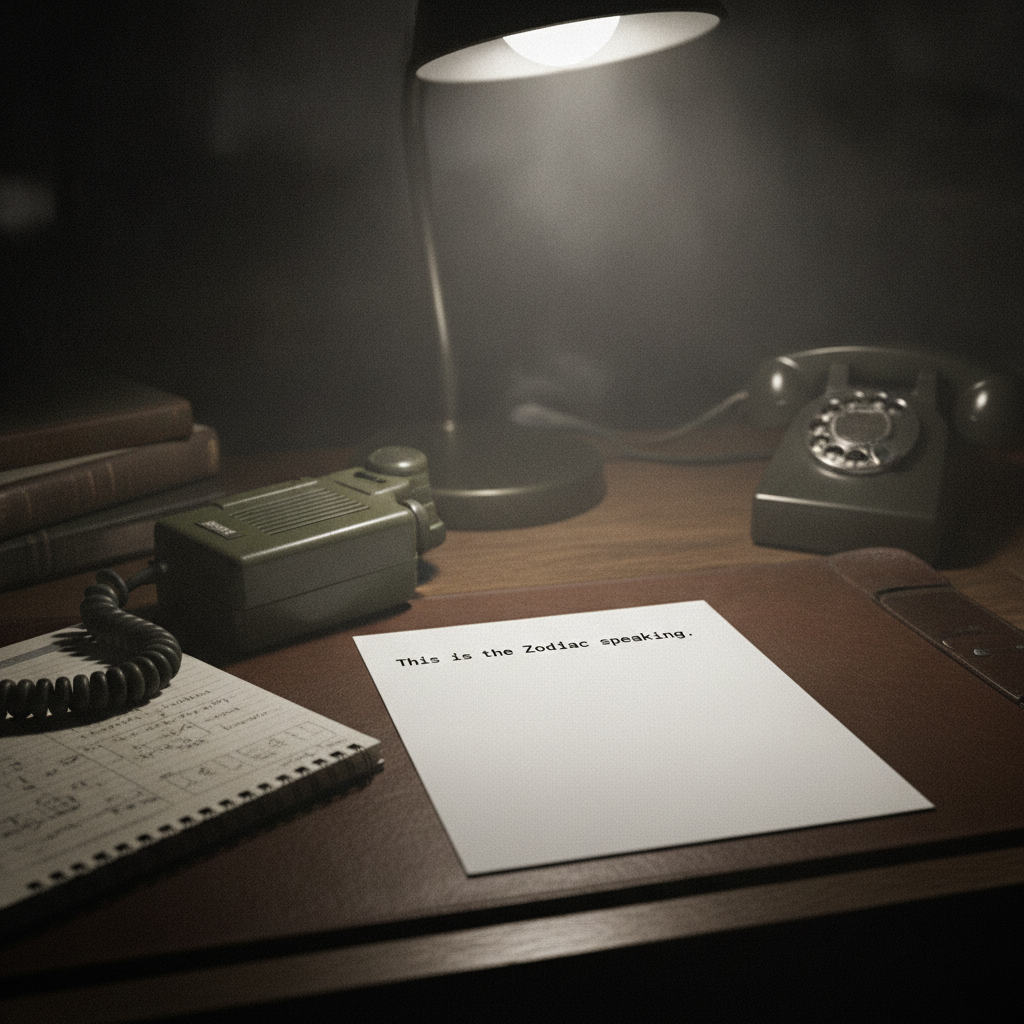
The tide of the times: a synergistic effect of social backlash, PTSD, and worsening public safety.
Unlike veterans of World War II, Vietnam veterans returned to the midst of an intensifying anti-war movement. In particular, in urban areas of California, including San Francisco and Berkeley, they faced cold stares and contempt from anti-war citizens, leading to deep social isolation. Furthermore, at the time, there was little medical understanding of psychological trauma, and many soldiers suffered severe psychological damage without diagnosis. Their continued vigilance and low threshold for violence, carried over from their battlefield experience, meant they were deployed as police officers on the harsh streets, contributing to excessive psychological friction and mental exhaustion in the face of deteriorating public safety.
Convergence towards the Zodiac statue
The phrase “This is the Zodiac speaking,” which Zodiac always placed at the beginning of his letters from the second letter onward, sets it apart from the emotional confessions and statements found in typical criminal letters, and instead maintains the structure of the “calling protocol” itself used in military radio and operational communications. The syntax used by Zodiac matches the standard military phrases that soldiers and radio operators are trained to use to confirm their identity and call sign over noisy lines. Furthermore, the name “Zodiac” itself reflects a military background. Behind its common meaning of the twelve signs of the zodiac, “Zodiac” was synonymous with the high-speed inflatable boats used by the U.S. military and special forces (Marine Corps Assault and Reconnaissance Units and Navy SEALs) for amphibious operations and infiltration missions during the Vietnam War. The symbolic system, word choices, and expressions of self-identification he used strongly reflect the behavioral practices of U.S. military communications and operations during the Vietnam War.
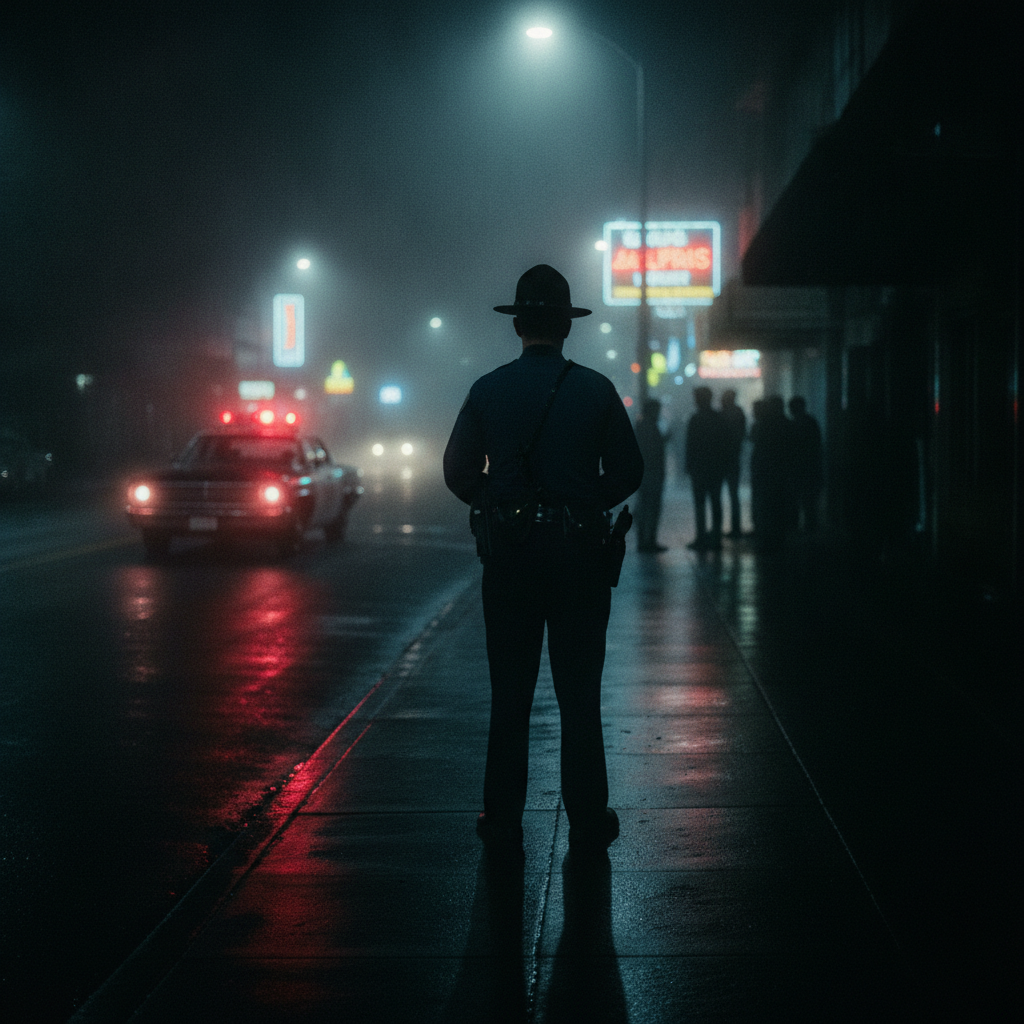
An analysis of the letters and behavior of the person calling himself Zodiac reveals numerous traces of his Vietnam War veteran background. From the use of formulaic phrases closely resembling military radio calling procedures, to the matching of names with military boats, and even the application of manual cryptography techniques compliant with the U.S. military Field Manual (FM), many of the elements he displayed are consistent with communication training and combat experience in the U.S. military. The late 1960s in California saw a large influx of Vietnam veterans, many of whom joined the police force to deal with the deteriorating security situation. The presence of veterans who joined California police forces with knowledge of communication manuals and maintaining military-style thought and behavior patterns perfectly matches the numerous technical and linguistic traces left behind by Zodiac.
Details of the Lake Berryessa case
On Saturday, September 27, 1969, at approximately 6:15 PM, about 14 days before the shooting death of taxi driver Paul Strineer, a college student couple, Brian Hartnell and Cecilia Shepherd, were attacked while picnicking on the shores of Lake Berryessa in Napa County, California. As the couple relaxed near a grove of trees by the lake, a man wearing a black hood and a strange outfit with a white “circle with a plus” symbol painted on his chest approached them. The man was wearing clip-on sunglasses and had a large knife and gun case attached to his waist. He threatened them at gunpoint and claimed to be an escaped convict from a prison in Colorado or Montana, and that he needed money and a vehicle to flee to Mexico. The man ordered Shepherd to tie Hartnell’s wrists with pre-cut plastic rope, and then tied Shepherd herself up tightly. Once the man confirmed that the two men were completely restrained and unable to move, he did not proceed with his previous demands for money or theft of the vehicle. Instead, he pulled out a double-edged knife with a blade of over 30 centimeters that he had been concealing and repeatedly stabbed the two defenseless men. Hartnell was seriously injured with six stab wounds to his back and abdomen, while Shepherd was left in a critical condition with a total of 24 stab wounds to various parts of his body, and died two days later in the hospital. After completing the stabbings, the perpetrator left the bodies and quietly departed the scene.
Immediately after completing the crime, the perpetrator went to the driver’s side door of the 1956 Volkswagen owned by the victim, Hartnell, and used a black marker to write the date of a previous crime, “Vallejo / 12-20-68 / 7-4-69,” along with the date and time of the crime he had just committed, “Sept 27-69-6:30,” and the words “by knife.” Furthermore, he called the police directly from a public telephone in Napa, about 32 kilometers from the scene, and reported his crime, stating that he wanted to report a double murder.
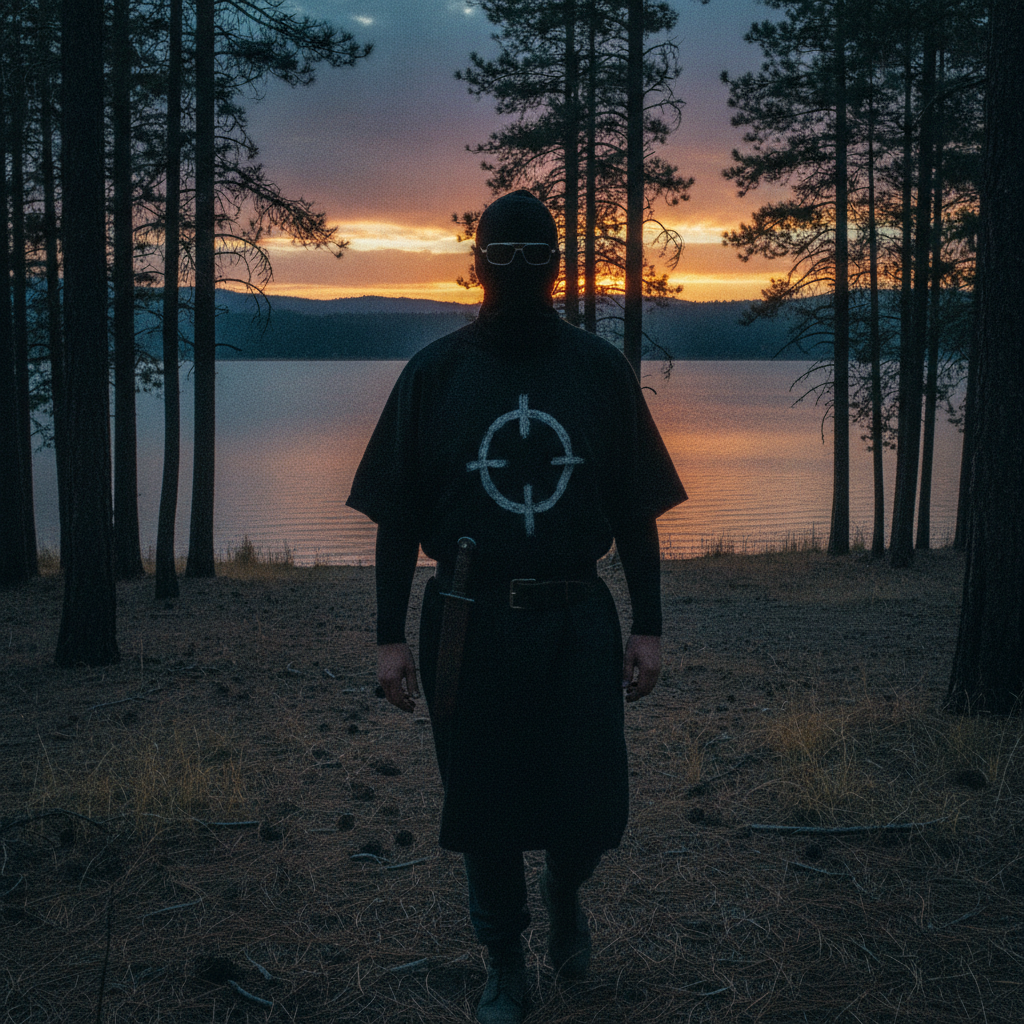
Was the Lake Berryessa murder committed by the Zodiac Killer?
In the third incident at Lake Berryessa, the perpetrator did not remove any physical evidence from the scene, such as the victim’s belongings or clothing. Compared to the true culprit (the Zodiac Killer), who would collect the victim’s bloodstained clothing and other items as proof of the crime and later mail them to a newspaper, this behavior of leaving no physical evidence at the scene is extremely unusual and severely lacks consistency in the modus operandi.
Approximately one hour after the incident, the perpetrator himself used a public telephone to contact the police. Considering that the Zodiac Killer always chose to use letters to newspapers or coded messages to make his crimes and demands known to the public, the act of taking the risk of calling the police directly from near the scene contradicts the logic of his previous media choices.
The perpetrator restrained and incapacitated the two victims before stabbing them with a knife, but left the scene without delivering a decisive blow to kill them. If the seriously injured victims survive and return home, it would not only diminish the brutality and threat of the incident, but also create a fatal risk of them providing eyewitness testimony or information to law enforcement.
The perpetrator scrawled the Zodiac symbol and the dates of past crimes on the door of the car at the crime scene using a permanent marker. For the Zodiac, who has the means to flaunt his presence to society as a whole through the broad media of newspapers, the act of directly writing symbols and dates on the car at the crime scene is redundant and incompatible with conventional, sophisticated methods of information dissemination.
If the perpetrator was the Zodiac Killer
If this was indeed the work of the Zodiac Killer, he would have certainly recovered some of the victim’s clothing and personal belongings. The physical evidence from Lake Berryessa would have been extremely valuable as material to include in a letter to irreversibly prove his guilt to the police and media and to shock society. Failing to secure physical evidence is an inconceivable lapse in his criminal protocol. Given that the Zodiac Killer’s objective is to instill fear in society and to legitimize his own authority, “certain killing” of the target is an absolute prerequisite. Leaving a defenseless target with only incomplete stab wounds would significantly diminish the gravity of the case and would contradict the Zodiac Killer’s cold-blooded principles of action.
For the Zodiac Killer, there was no need to rely on risky immediate phone calls. He could exclusively and unilaterally publicize his crimes to the public and boast about them while mocking the police by sending self-crafted letters and sophisticated coded messages to multiple newspapers, without going through the police communication network. Excessive on-site reporting deviates from the information disclosure procedure he had established. For the Zodiac Killer, who had the reliable means of publication in the form of newspapers, there was no necessity to expose his name or symbol at the crime scene. Performing an act of displaying his identity at the scene would only leave useless traces for investigators and would be completely pointless. The Zodiac Killer always left an impersonal crime scene and adhered to the method of proving his existence only through letters and coded messages sent later.
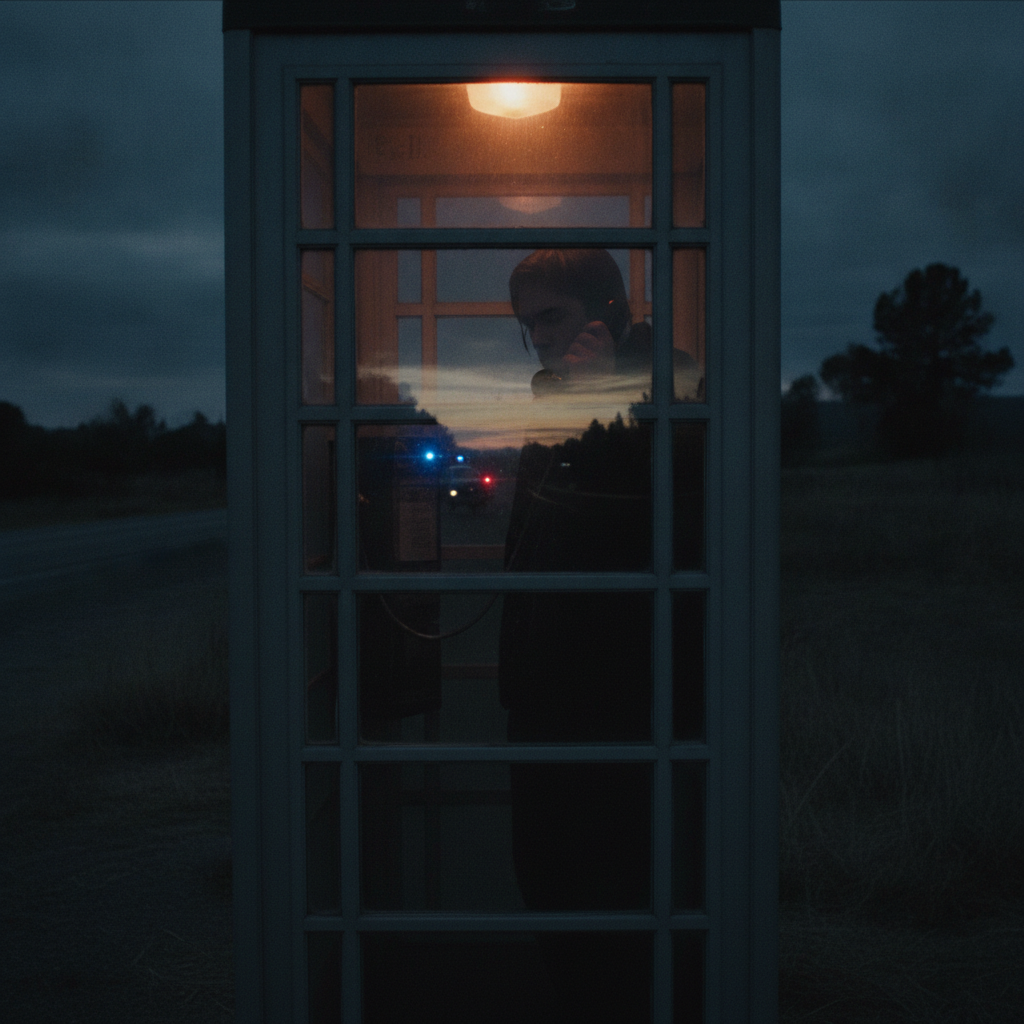
The true culprit’s intentions
The perpetrator’s actions in this case can be interpreted as a cleverly orchestrated performance based on a specific intention. First, the perpetrator instilled in the victim a strong impression of being a serial killer who terrorized society by showing them his bizarre clothing and the Zodiac mark. Then, while attacking with a knife, he deliberately chose to avoid inflicting fatal wounds, thus keeping the victim alive. However, there was a concern that if the victim’s blood loss from the stab wounds was left untreated, they would die within a night, and there would be no one to verbally testify about his “performance.”
The perpetrator then called the police himself, urging them to quickly dispatch paramedics and police to the scene. This allowed the victim to be rescued and created an environment where the victim would testify in the police interrogation room that “the perpetrator was the Zodiac.” Furthermore, as a backup in case the victim died before rescue, the perpetrator wrote the Zodiac mark and the dates of past crimes on the car door. The purpose of this series of meticulous steps was not to impersonate the real culprit (the Zodiac), but rather to shift all responsibility for his own selfish crimes onto the existing monster (the Zodiac), thereby diverting the police’s investigation and allowing him to escape.
The third incident at Lake Berryessa was not committed by the Zodiac Killer himself. The fact that he did not secure any definitive evidence of his involvement at the crime scene clearly contradicts his established pattern of behavior, making it highly unlikely that he was the same person. In addition, all of his actions, from avoiding a sure killing with a firearm and opting for an incomplete stab wound with a knife, to the excessive marking of symbols at the scene, and the immediate police call, deviate from his rational and cold-blooded protocol. These elements suggest that it was a calculated cover-up by another criminal attempting to pin his crimes on the Zodiac Killer and deceive the investigation.
Summary of the incident
On Saturday, October 11, 1969, at approximately 9:55 p.m., the fourth crime occurred in Presidio Heights, an upscale residential area of San Francisco. The victim was Paul Stein, a 29-year-old taxi driver working for San Francisco’s Yellow Cab Company. The most significant structural change presented by this case lies in the shift in location. While the first and second crimes occurred in vast, open suburban areas under the jurisdiction of the Vallejo Police Department, and the third under the jurisdiction of the Napa County Sheriff’s Office, this crime was committed in a residential area in the heart of the city, within the jurisdiction of the San Francisco Police Department. The change in police jurisdiction and the shift to urban areas were intended to disperse and confuse the investigative network.
The perpetrator boarded Stein’s taxi near the Theater District, a bustling downtown area of San Francisco. This boarding is corroborated by the taxi company’s radio communication records and fare receipts. Initially, the perpetrator’s designated destination was the intersection of Washington Boulevard and Maple Boulevard. However, upon reaching the vicinity of the destination, the perpetrator changed his instructions to the intersection of Washington Boulevard and Cherry Boulevard, one block further away. The crime scene, the northwest corner of Cherry Boulevard, was a dark area where the streetlights were obscured by the large shadows of the street trees, and to the north lay the woods of the Presidio Military Reserve, providing an immediate escape route. The perpetrator intentionally guided the vehicle into this dark area, considering the amount of light and the escape route.
Immediately after the taxi came to a designated spot on Cherry Lane, the assailant pulled out a 9mm automatic pistol and fired at close range at the back of Stein’s head (behind his right ear) as he sat in the driver’s seat. The rapid hit to the central nervous system by the 9mm bullet resulted in instant death, and Stein’s body fell towards the passenger side. Due to the kinetic energy and penetrating motion of the bullet, most of the blood and tissue spilled forward and towards the passenger side, causing massive blood loss inside the car. By maintaining his firing position from the rear, the assailant minimized direct blood splatter on himself and completed the manual, decisive killing.
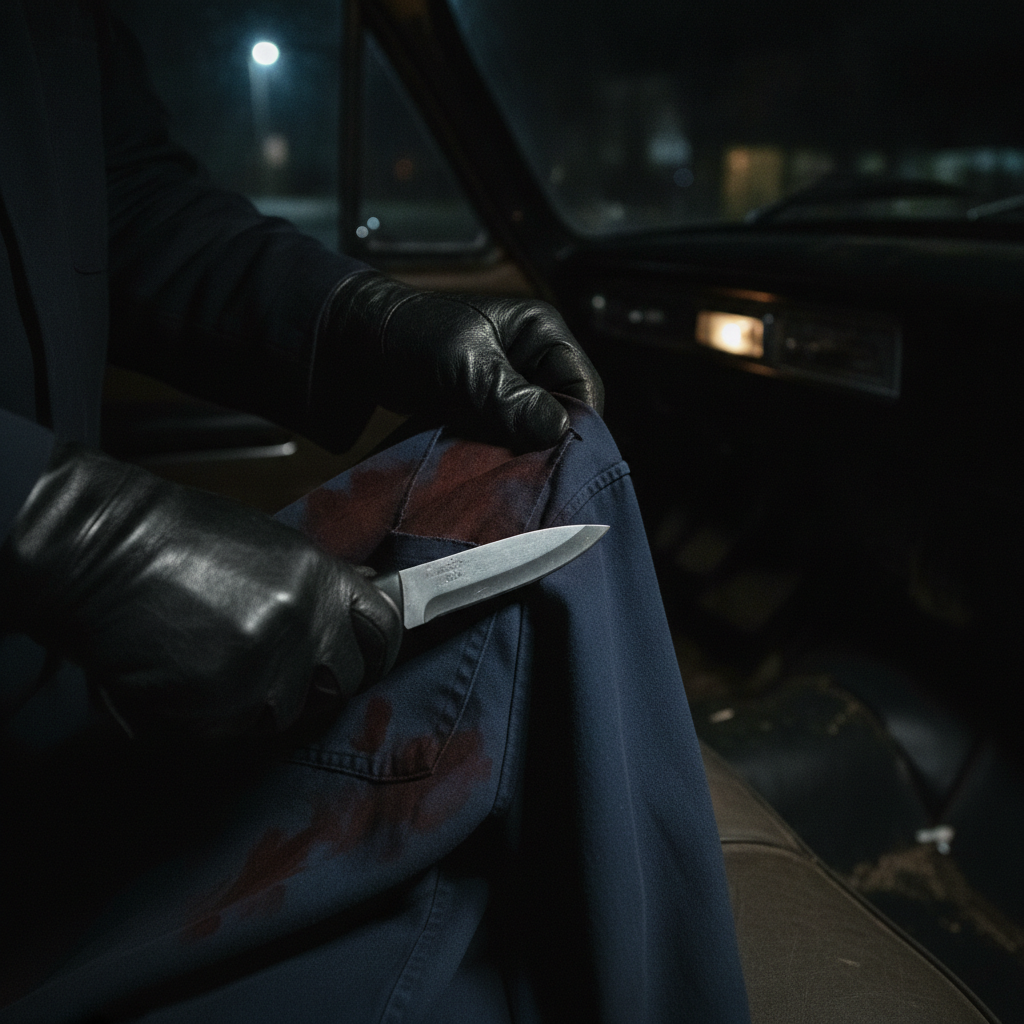
After shooting Stein, the perpetrator did not attempt to escape but remained in the car, taking his wallet and car keys from his pockets. He then took a large knife from his waist and carefully cut a large rectangular section from the back of Stein’s long-sleeved shirt, which was soaked with a large amount of blood, and took it away. This unusual cutting operation, carried out at the risk of getting blood on his hands and cuffs, was a highly unusual action unique to this case and set it apart from typical robbery resulting in death aimed at stealing valuables.
A fatal blunder by the witness and the police.
Witnessed by a white teenager
The entire sequence of events was witnessed in real time by three white teenagers from a second-floor window of a house located directly across from the intersection where the crime took place. They accurately observed the perpetrator rummaging through the car under the shadows of streetlights and the car’s interior lights, cutting a shirt, and then calmly walking away towards Presidio Park to the north. They immediately notified the San Francisco Police Department. Following the incident, police created a composite sketch of a white man with short brown hair and thick-rimmed glasses based on the detailed testimonies of these witnesses, and released it nationwide.
Radio miscommunication (racial misidentification)
Following an immediate report from a witness, the San Francisco Police Department’s radio command center issued a suspect alert to patrol cars patrolling the area. However, due to a communication error by the commander, the wanted person was mistakenly identified as a Black male, not a white man. In the early 1970s, strong racial prejudice and discrimination still persisted in American society, and the investigators’ cognitive biases led them to focus their search on a Black suspect. This radio miscommunication created a critical blind spot in the search for the real culprit, who was in the vicinity of the crime scene.
Encounter with a police officer
The suspect, walking down a street two blocks from the scene, passed a patrol car carrying Officer Falk and his team, who were rushing to the scene. The officers approached a white man walking in a dark jacket, but were preoccupied with the preconceived notion that the suspect was a “black man” based on radio communication, and therefore ruled him out as a suspect. Officer Falk himself recognized this encounter as a fatal oversight and concealed the fact of the contact from the official records for about a month after the incident.
Third letter
On October 13, 1969, two days after the fourth murder in San Francisco (the killing of taxi driver Paul Stein at Presidio Heights), an envelope from someone claiming to be the Zodiac Killer was delivered to the editorial office of the local newspaper, the San Francisco Chronicle. This was the third letter sent by the killer in the series of murders. The postmark was dated October 13, immediately after the incident, and it was confirmed that it was mailed from a San Francisco post office. The most conclusive aspect of this letter was the presence of physical evidence enclosed inside the envelope. Inside the envelope was a bloodstained piece of cloth, approximately 2 inches by 3 inches in size, which had been directly cut with a knife from the back of the long-sleeved shirt worn by the murdered taxi driver, Paul Stein. While the first and second letters only contained coded messages and objective descriptions of the incidents, the third letter was the first to include irreversible physical evidence directly taken from the victim at the scene. The inclusion of this blood-stained shirt fragment irreversibly proved to investigators and the media that the sender of the letter was the very person who killed Paul Stein at the Presidio Heights.
Original text of the letter
This is a message from the Zodiac. I killed the taxi driver last night near Washington Avenue and Cherry Avenue. To prove it, I’ve enclosed a piece of his bloodstained shirt. I’m also the one who killed people in the North Bay area. The San Francisco police could have caught me last night if they had properly searched the park instead of racing their motorcycles to see who could make the loudest noise. The patrol car drivers should have just stopped their cars and waited quietly for me to come out of hiding. Schoolchildren make good targets. I’m thinking of wiping out an entire school bus one morning. I’ll just shoot out the front tires and take out the kids one by one as they jump out.
Analysis of the letter
The third letter begins with the killer’s signature phrase, “This is a message from the Zodiac.” At the start of the letter, the killer directly confesses to having murdered a taxi driver the previous night at the intersection of Washington Street and Cherry Street, and instructs the recipient to examine a bloodstained piece of shirt enclosed as objective evidence of this fact. There is something noteworthy about this letter: despite repeatedly mentioning the first two incidents, there is no mention of the Lake Berryessa murder that occurred two weeks earlier.
The Zodiac Killer case: the biggest mystery.
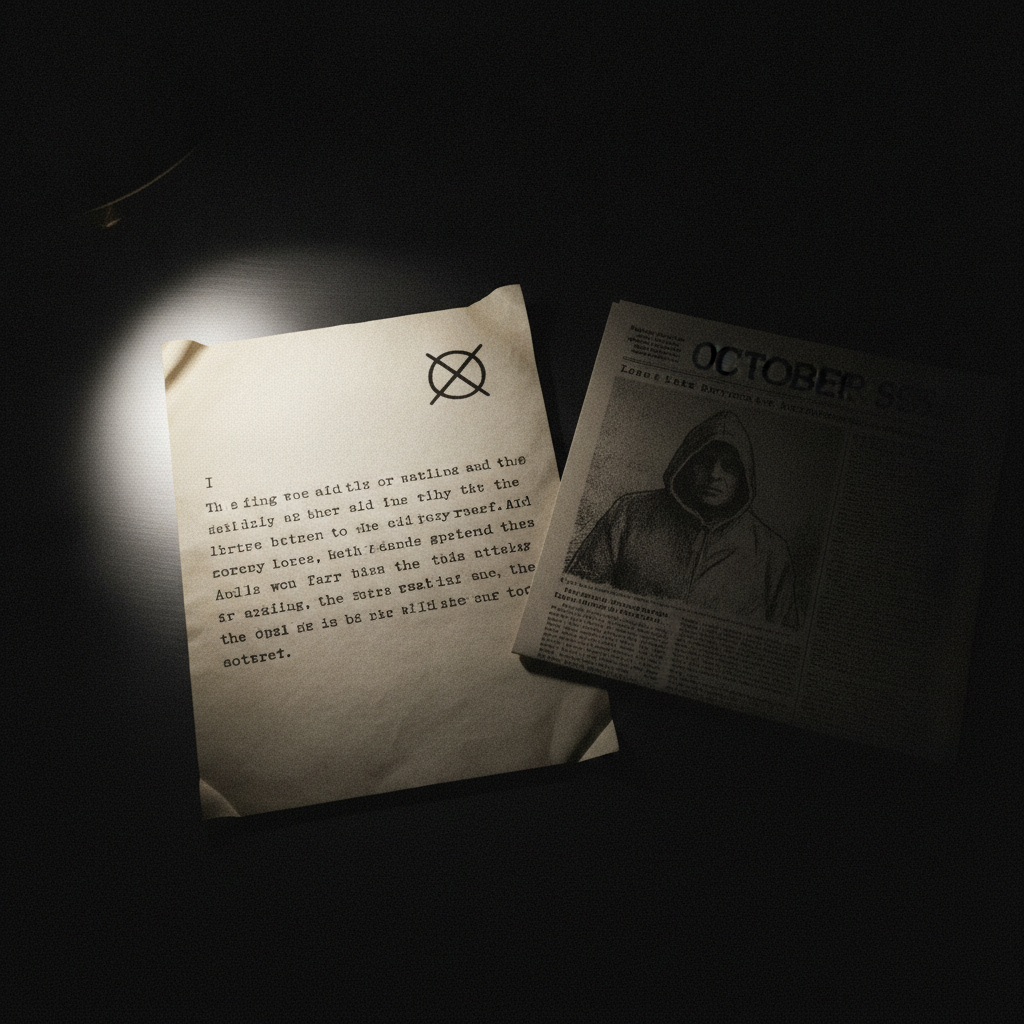
Why was the Lake Berryessa incident ignored?
The Lake Berryessa murder occurred fourteen days before the San Francisco taxi driver attack. This incident was widely reported in newspapers and other media at the time. Furthermore, the Zodiac Killer, a serving police officer, had access to detailed investigation files and forensic data from the crime scene that were not made public. Despite this, his third letter made no mention of the Lake Berryessa murder that had occurred just before, completely ignoring it. For a criminal and imposter who flaunted his existence and continued to provoke the public and the police, this major incident that attracted public attention should have been the most convenient to claim as one of his victories. However, in that letter, he deliberately brought up the first and second incidents in Vallejo, which had already been solved and acknowledged, and took the action of reiterating that he was the perpetrator. The fact that a person who had a complete grasp of the news reports and was intimately familiar with internal documents deliberately ignored the most recent major incident and only asserted ownership of past incidents remains a clear contradiction. Considering the timeline of the events and his access to information, this choice to remain silent is extremely unnatural and stands as a major mystery that must be solved.
Third behavioral analysis
Why didn’t you deny it?
If he had been falsely accused, he could have calmly denied the accusations of others by clearly stating through newspapers and other media that “the author would have secured physical evidence to prove his own guilt. Anyone who does not, or cannot, present such evidence is not me.” However, the Zodiac Killer’s actual actions involved completely ignoring the Lake Berryessa incident that had occurred shortly before, and instead presenting clear physical evidence: a bloodstained piece of shirt he had taken from the scene of the taxi driver attack that occurred immediately afterward.

Behind this behavior lies a unique mental structure that is difficult for ordinary people to understand. He possessed an extremely inflated sense of self-esteem and a pathological obsession with the symbol (branding) of an absolute and ruthless killer that he had constructed for himself. For him, the act of deliberately defending or denying his actions to the police or the public would have been a humiliating exposure of his own weakness and instability, signifying the collapse of his self-esteem. Therefore, the option of clarifying the situation and denying it through words never even existed for him from the beginning.
Furthermore, having a thorough understanding of internal police documents and news reports, he knew that verbal denials would have no persuasive power against the police organization and would be seen as lies intended to escape punishment. The fear of the death penalty (gas chamber) imposed upon him, combined with the anxiety of his own authority being threatened by the existence of imposters, led him to skip the bait-and-switch tactic of denial and attempt to overwrite his authority with more extreme and decisive facts.
Instead of offering a verbal explanation, he resorted to the extreme measure of committing another murder in the heart of a major city and presenting irrefutable physical evidence—a manifestation of the uncontrollable rage and overreaction that arises when one’s narcissism is wounded. This deranged reaction and logical breakdown is the very essence of the mental structure that transformed him into a monster and gave rise to the incomprehensible distortion of his third action.
Psychiatry and criminal psychology (profiling)
Narcissistic Rage in Narcissistic Personality Disorder (NPD)
At the root of narcissistic personality disorder lies an inflated sense of self-love and a strong, pathological obsession with maintaining one’s own omnipotence and absolute superiority. When individuals with this disorder feel their perfect image or dominant position is threatened, or when they are belittled or scorned (so-called “incitement”) from the outside, they are unable to go through the stages of calm denial or logical counter-argument that most people would. As a result, uncontrollable rage and catastrophic destructive behavior are immediately triggered as a defense mechanism against the sudden wounding of their narcissism. This is the mechanism of “narcissistic rage healing” as defined in psychiatry. For them, the act of defending or denying is synonymous with the humiliation of standing on the same level as the other person and admitting that they have been hurt or affected. Therefore, instead of choosing verbal explanation or counter-argument, they immediately resort to an overreaction that attempts to forcibly rebuild their wounded self-esteem and sense of superiority through overwhelming violence or decisive use of force to subdue the other person.
Comorbidity with antisocial personality disorder (ASPD) (malignant narcissism)
The combination of narcissistic personality disorder and the characteristics of antisocial personality disorder, which involves the unhesitating violation of the rights and lives of others, is called “malignant narcissism” by psychiatrist Otto Kernberg. Individuals exhibiting this condition are not merely egocentric; they feel no guilt or ethical conflict whatsoever regarding their actions against others. They delude themselves into believing they transcend societal rules and legal norms, constructing their own sense of omnipotence. However, they are extremely sensitive to external interference and provocations such as police investigations, media coverage, and copycat crimes, and absolutely cannot tolerate any threat to their sense of self-worth or dignity. Patients with malignant narcissism have a behavioral circuitry that is prone to mental short circuits. Therefore, without going through the interpersonal process of objective and calm “denial,” they choose the worst possible behavioral pattern: directly attacking and killing their targets to prove their dignity and dominance through real-world actions.
The “reactive” psychopath aspect
In criminal psychology, the classification of psychopaths is divided into “primary psychopaths,” who are cold, calculating, and emotionally stable, and “secondary (reactive) psychopaths,” who are emotionally unstable and react explosively to rejection or provocation from the outside. This type may appear to be an intellectual who executes meticulous and ruthless plans, but inwardly they are vulnerable to damage to their self-esteem and possess intense impulsivity. When exposed to criticism or negative evaluation from the outside, they lack the inhibitory function to objectively observe the situation and ignore it, or to calmly deal with it verbally. As a result, they easily fall for the provocation and cannot help but overreact to assert their presence and abilities. The impulsivity that drives them to extreme actions and messages when provoked or contradicted, without the ability to control themselves, is precisely a mental defect unique to reactive psychopaths.
The abnormal behavior observed in the Zodiac Killer can be logically explained by a complex psychopathology encompassing narcissistic personality disorder, malignant narcissism, and reactive psychopathy. He lacked the normal processing circuitry of “objectively denying things through words.” Due to this deficiency, when faced with situations that threatened his self-esteem, his uncontrolled narcissistic rage and dysfunctional emotional control mechanisms directly linked, forcing him to resort to extreme actions such as murder accompanied by physical evidence or desperate attempts to prove himself.
Compatibility with puzzles

Asymmetrical games to maintain “absolute advantage”
Individuals with narcissistic personality disorder are unable to build equal relationships with others and pathologically desire to always be the dominant one, that is, to maintain a position of superiority in all relationships. In real-world crime investigations and crime scene investigations, they are constantly exposed to the disadvantageous risk of arrest and discovery due to the intricate police investigation, unexpected incidents at the scene, and the presence of witnesses. In contrast, in the world of “codes (puzzles)” in which they design and present their own rules, they, as the puzzle creators, maintain complete control and absolute superiority. The process of the police and society struggling to decipher the code itself powerfully satisfies their inflated narcissism and sense of omnipotence. The puzzle format had a very high affinity with them as an asymmetrical battlefield to compensate for their vulnerability in real society, such as their position and fear of the police network, and to drag others into a controllable realm and unilaterally dominate them.
A cooling device that transforms emotional outbursts (narcissism, anger, healing) into an “intellectual structure.”
When his pride was wounded by police provocations or media reports of copycat crimes, an uncontrollable rage known as “narcissistic rage” erupted within him. However, his pride, which desires to believe in himself as a superior and omnipotent being, would not allow him to simply unleash indiscriminate violence on the streets. Therefore, he chose a process of sublimation, channeling the boiling rage within him into the meticulous intellectual activity of creating complex and precise codes. By presenting his own turmoil, unsightly excuses, and raw rage as an intellectual structure—a highly complex puzzle that was difficult to decipher—he perfectly concealed his mental fragility and emotional ugliness. The act of creating codes functioned as an effective defense mechanism to temporarily cool down catastrophic emotional outbursts and to rebuild and maintain his facade as a cold, ruthless ruler.
Puzzles as a compensatory act for something that “cannot be denied”

Lacking the normal mental circuitry to objectively deny or defend himself through words, sending puzzles was the ultimate compensatory act for him. Unable to calmly prove in writing that “it wasn’t me” in the face of suspicion and the existence of copycat criminals, he resorted to creating and sending incomprehensibly complex codes to the police. This served as a powerful expression of rejection and cynicism, conveying the message, “You can neither understand me nor catch me.” The experience of his initial code (Z408) being cracked in just a few days, which deeply wounded his self-esteem, motivated him to make subsequent codes (Z340) extremely complex and sophisticated. The fact that the difficulty of the codes increased dramatically is a manifestation of his compensatory mechanism, an attempt to repel the mental pressure he received from the outside by constructing a stronger wall in the form of puzzles.
For the Zodiac Killer, ciphers (puzzles) were not merely intellectual amusement or a way to harass the police, but a sophisticated psychological fortress to defend his pathological narcissism. When faced with mental crises caused by real-world threats and provocations, lacking a mechanism for denial, he transformed his rage and fear into the form of complex puzzles. Through this alternative method of creating ciphers, he prevented his own mental breakdown and maintained his illusion of absolute superiority over the police.
Structure and Strategy of the Fourth Letter
Summary and context of the fourth letter (Z340 encrypted transmission)
The fourth letter was mailed to the San Francisco Chronicle on November 8, 1969, about a month after the murder of a taxi driver in San Francisco (the Presidio Heights case). This letter contained a 340-character coded message later known as “Z340.” Having had his pride in his intellectual abilities wounded when the Z408 code enclosed in the first two letters was deciphered by ordinary citizens in just a few days, this fourth letter was an extremely important statement for him to rebuild his absolute superiority.
The Z340 cipher was an extremely difficult cipher that, for 51 years since its introduction in 1969, thwarted the FBI, the Navy’s cryptography departments, supercomputers, and cryptographers worldwide. When it was finally cracked in 2020 by an international volunteer team, it was revealed that its structure was not simply one-to-one symbolic substitution (monoalphanic substitution), but rather a multi-stage cryptographic algorithm that highly combined “transposition,” which involves moving and rearranging characters diagonally, with “polyalphanic substitution.”
Having experienced the easy cracking of his early Z408 cipher, he channeled his narcissistic anger and anger into increasing the complexity of the cipher structure. Behind the seemingly random sequence of symbols lay a mathematically and linguistically robust regularity. This fact confirms the immense time and intellectual obsession he dedicated to defending his narcissism.

The text of the Z340 cipher, deciphered in 2020, directly recorded the vulnerabilities of his mental structure and his motivations. The deciphered text included statements to the effect that “it wasn’t me who was talking about me on the TV show” and “I’m not afraid of the gas chambers.” This was a direct rebuttal to an incident that occurred a few days before the cipher was sent, in which a mysterious phone caller calling himself “Zodiac” (nicknamed Sam) complained of fear and distress, saying things like “I have a headache” and “I don’t want to go to the gas chambers.”
For him, who wanted to project an image of absolute and mercilessness, the existence of the imposter “Sam,” who impersonated him and made a spectacle of himself on public airwaves, was an unbearable insult. As mentioned earlier, he lacked the processing circuitry to “calmly deny something with words.” Therefore, he overreacted by sealing his counter-argument, “I am not afraid of gas chambers,” inside a massive code that no one could decipher for 50 years and sending it out.
The time when it was written
The exact time when the fourth letter was written is extremely clear. Judging from the contents of the letter and the enclosed coded message (Z340), the writing period can be narrowed down to just a few days, from immediately after the television talk show aired on October 22, 1969, until it was mailed on November 8 of the same year. In the program, the man who made the suspicious phone call claiming to be “Zodiac” was shown on air nationwide weeping and looking utterly distraught, saying things like, “I have a headache,” and “I don’t want to go to the gas chamber.” This incident severely wounded his self-esteem, which had defined him as an absolute and utterly ruthless being.
As psychiatric analysis indicates, this fourth letter is the product of an excessive and pathological defense mechanism against the damage to his self-esteem. He lacked the mental capacity to calmly defend or deny external misunderstandings and insults with words. Therefore, within just a few days of the program airing, he wrote a letter strongly asserting that the man on television was an imposter, and at the same time hastily constructed an extremely difficult code that remained undeciphered for 51 years.
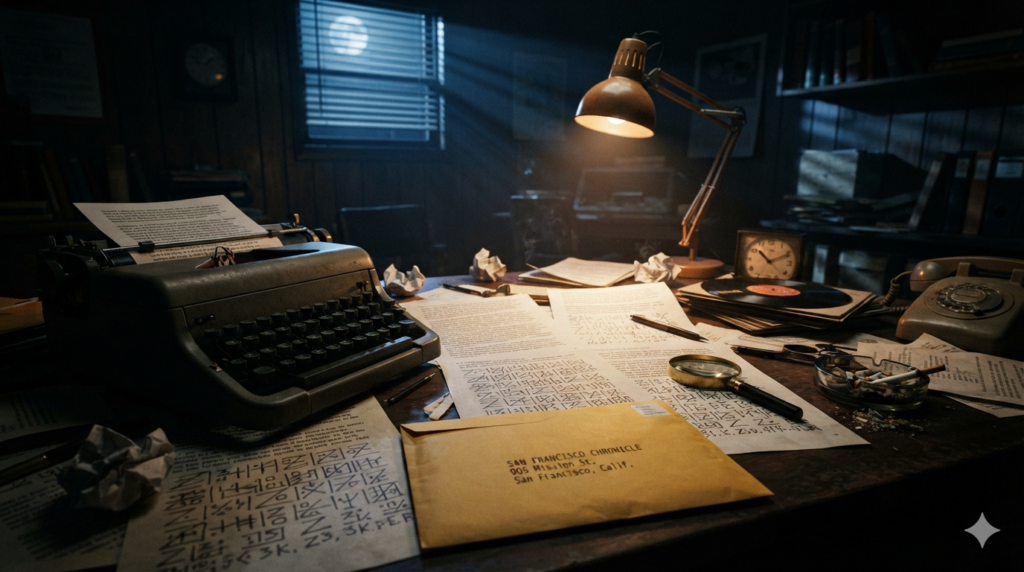
The extremely short time lag between the broadcast and the mailing of the letter directly proves that he was driven by uncontrollable anger and impatience to immerse himself in writing and production immediately after being subjected to the insult. Identifying the date when the fourth letter was written provides objective and conclusive evidence that he had a behavioral principle that compelled him to react immediately and excessively to wounds in his self-esteem.
Fifth letter
On April 20, 1970, a greeting card was mailed to the San Francisco Chronicle. The cover bore a phrase signifying an explosion, and inside, along with the standard phrase “This is the Zodiac,” was written “My name is,” followed immediately by a 13-letter sequence of symbols. In the text, the sender denied involvement in the police station bombing and the bus driver attack, claimed to be a person of high status, and expressed interest in the reward money and claimed to have killed a total of 10 people. This document, delivered after a gap of about five and a half months since the fourth letter was mailed, at first glance seemed to follow the format of previous threatening letters.
Something felt off about the first four letters.
Differences in grammar, expression, and spelling mistakes

When comparing the first four documents with the fifth document, a decisive difference can be observed from the perspective of grammar and linguistic expression. In the first four documents, the text frequently used disorganized subordinate clauses and excessive emphasis, reflecting heightened emotions and inflated self-assertion. In contrast, the fifth document adheres to standard English grammatical rules, precisely combining modifiers and conditional clauses, and is constructed objectively and logically. The meta-descriptive structure, which defines one’s own attributes after evaluating the criminal actions of others, is clearly different from the mental protocol of the impulsive and direct threats in the previous works.
A more striking discontinuity is observed in the nature of the spelling errors. In the early letters, regular misspellings such as the addition of unnecessary letters to the end of words and the substitution of certain vowels were persistently repeated. These were not simply signs of ignorance, but rather traces of deliberate placement as a way to conceal one’s identity or as a unique code. However, in the fifth letter, the unusual patterns of misspellings that had persisted in the past have disappeared, and the writing has normalized to grammatically correct form. The word placement and spelling accuracy in the text conform to the writing habits of a generally educated person, and the distinctive mimetic and linguistic quirks that the early writer possessed are completely absent.
Absence of motivation for writing the letter
The first four messages were reactions stemming from a defense of self-esteem, while the fifth message was absent.
The first four letters were written as an excessive reaction to defend and rebuild one’s self-esteem when one’s dignity and absolute authority were threatened by media coverage and police actions. A typical example is the immediate verbalization of anger and the construction of a sophisticated code immediately after an imposter damaged one’s reputation on television. However, in the fifth letter, there is no urgent defensive motive against external insults or stimuli. The objective interest shown in past cases and reward money, and the calm assertion of differentiating one’s own crimes from those of others, do not reveal the impulsiveness driven by wounded self-esteem. The absence of a pathological motive driving the actions clearly indicates a change in the writer’s psychological protocol.
Puzzle deterioration
The 13-character sequence of symbols (Z13) enclosed in the fifth letter severely lacks the structural requirements for a cipher and puzzle. Compared to the previous Z340 cipher, which demonstrated a sophisticated cipher-making ability by constructing a complex multi-stage algorithm combining diagonal movement of characters and polyalphabetical substitutions, and remained undecipherable for over 50 years, the quality of this sequence of symbols is critically inferior. Its extreme brevity of only 13 characters, the lack of recurring symbols or mathematical hooks for decryption, makes it nothing more than a random sequence that allows for countless interpretations structurally. A true Zodiac would have constructed a robust intellectual fortress using sophisticated transpositions and substitutions, and this mathematical failure demonstrates a critical lack of cipher-making ability.
conclusion
The consistency of objective facts—date and time, grammatical structure, disappearance of spelling errors, motivation for writing, and the breakdown of the cipher structure—leads to a single conclusion. The early writer, characterized by advanced cryptography skills and excessive self-preservation behavior, and the fifth writer, who used standard grammar and attached a nonsensical string of symbols, cannot be the same person. Including the complete lack of physical evidence, the fifth letter is not a letter written by the real Zodiac Killer, but a fabricated document created by a third party (a fraud) who imitated reported information.
Unresponsive Zodiac
Anger at the fifth letter
For the real Zodiac, who held absolute faith in his own intelligence and ruthlessness, the clumsy imitation by a third party was an unbearable insult. The Z13 cipher presented in the fifth letter was nothing more than a worthless string of symbols lacking the sophisticated inversion algorithm of the Z340 he himself had created, and it trampled on his pride as a cryptanalyst. Considering his behavior in the fourth letter, in which he immediately became enraged at the imposter on television and launched an excessive counterattack, it was inevitable that the real Zodiac would feel intense anger at the appearance of this inferior fake and the diminishment of his own existence.

The motivation behind the sixth action
The historical fact that he immediately mailed a fourth letter in response to the fake television program clearly demonstrates the genuine protocol of action when one’s pride is wounded. There is no option of remaining silent in the face of external insults; instead, a mechanism is in place to quickly activate actions to redefine one’s own absolute authority. Therefore, when the fifth, poorly made fake, was released into the world, the real one should have immediately retaliated. The means of retaliation would naturally include a scathing denial of the fifth letter as a fake, the presentation of a new, highly sophisticated code to demonstrate true cryptographic ability, or the enclosement of decisive physical evidence that only the real one would know, or the execution of a new crime. Judging from the responsiveness and excessive self-defense mechanism shown in the fourth letter, the fact that the real one did not act immediately after the fifth letter completely contradicts his usual principles of action.
Disruption of response
In response to the fifth impostor’s arrival, no counterattack or reaction from the real person was observed, resulting in a breakdown in their actions. If we consider the hypothesis of a change of heart to explain this breakdown, its validity is extremely low. It is highly unlikely that a person who had committed such heinous acts as to coldly shoot a taxi driver and then cut up his blood-stained shirt and sent it to him would undergo a mental transformation and have a change of heart in just a few months. In a mental structure where inflated self-esteem and violence formed the foundation of one’s existence, the spontaneous acquisition of a sense of morality or silence resulting from remorse is clinically improbable. The logic that a person who repeatedly committed heinous crimes and remained obsessed with showing off would exercise self-control and choose silence in the face of the greatest provocation—the proliferation of impostors—has a clear flaw.
conclusion
The existence of a behavioral principle that immediately triggers excessive retaliation in response to external stimuli, and the logical exclusion of the option of repentance, together lead to one definitive conclusion. The fact that the real Zodiac Killer remained silent and showed no reaction whatsoever to the insulting imitation in the fifth letter by the imposter means that he was not simply unwilling to retaliate, but was physically “unable” to do so. The only explanation for why he was unable to write letters or carry out new crimes despite being driven by rage is that his bodily functions, or even his life itself, had been extinguished. The irreversible break in the traces of the real Zodiac Killer, which ceased after the fourth letter, and the lack of reaction from the fifth letter onward, objectively demonstrates that the real Zodiac Killer most likely died during this period of silence.
The true meaning behind the police chief’s provocations
Suspect police involvement
The details of the crime and investigative information contained in the first letter bore a striking resemblance to the format of official investigative documents and crime scene records shared within the police force. The selection of facts that only the perpetrator could have known, and the use of terminology specific to the report, went beyond the scope of a mere bystander or an outside criminal. Based on these objective facts, the police chief in charge of the investigation came to strongly suspect that the mastermind behind the series of heinous acts was not an outsider, but a serving police officer who was intimately familiar with the internal structure and investigative procedures of the police organization.
Using newspaper articles to provoke and incite
The police chief, harboring serious suspicions that the perpetrator was an active police officer, issued a statement using the newspaper media as a means to expose the culprit. The investigative authorities deliberately published skeptical views, stating that “there is no conclusive evidence that the letter’s author is the real culprit” and “there is insufficient evidence to prove the details of the crime,” thereby undermining the perpetrator’s pride. They exploited the perpetrator’s desire to flaunt his achievements and intelligence, psychologically manipulating him into submitting additional decisive evidence and statements.
The content of the second letter confirmed my belief
In response to the probing question sent through the newspaper, the culprit immediately sent a second letter. This letter contained even more previously undisclosed details about the crime scene than the first, as well as a detailed rebuttal based on the police’s internal investigative procedures. The existence of this second letter, which showed an extremely sensitive and immediate response to the police’s attempts to pressure the police and revealed knowledge that only an insider could possess, transformed the police chief’s suspicion that the perpetrator was someone within the police force into a definitive certainty.
The police chief’s agonizing decision: to conceal the police officer’s involvement.
Prioritizing maintaining security in California
The fact that a serving police officer was a serial killer had the potential to completely destroy the credibility of the police as a law enforcement agency. If the perpetrator’s identity were made public, public trust in the police organization would completely collapse, and widespread social chaos due to the breakdown of law and order would inevitably spread throughout California. The police chief, burdened with the noble cause of maintaining public order and ensuring the survival of the organization, made the agonizing decision to secretly proceed with the identification of the perpetrator internally while keeping the true background of the case isolated from the public investigation.
The fact that the very institution meant to protect the safety of citizens was the source of terror was a dark secret that could not be made public for any reason. Therefore, the focus of the investigation was deliberately steered toward suspicious individuals from outside or an unspecified profile of the perpetrator, while a cover-up operation was carried out in parallel to eliminate any trace of internal involvement from the official investigation records. Under the dual constraints of public justice and the defense of the organization, the case shifted to a two-tiered structure: an open investigation and a top-secret internal investigation.
Identifying the Zodiac Killer through composite sketches from taxi attacks and attendance records.
A house search conducted while the homeowner is away can be conclusive.
A revised composite sketch, created and released immediately after the October 1969 murder of a taxi driver, became the key factor in narrowing down the suspects during the internal investigation. The police chief meticulously compared the features of this sketch with the work shifts of officers at the time of the incident. By narrowing down the individuals who were located near the murder scene or who were off-duty or acting alone, a specific police officer emerged as a suspect. The suspect officer was intentionally sent away from the station and his home under the pretext of business trips, remote field assignments, or wide-area inspections, and a top-secret house search was conducted during his absence. During the house search, which was carried out without prior notice, objective evidence that completely corroborated the crime was revealed one after another, including the victim’s belongings, the weapon used in the murder, the paper and ink used to write the letter, and even a draft of a code, making the identification of an insider decisive.
Survival confirmation
A top-secret internal investigation began with the creation of a composite sketch on October 18, 1969, and the survival and activities of the police officer in question were objectively confirmed until the fourth letter (containing the Z340 code) was mailed on November 8 of the same year. The writing of this fourth letter and the creation of the code are the last clear traces indicating that he was physically alive and making a statement. After the mailing of the fourth letter, all objective data regarding his whereabouts and whether he was alive or dead completely disappeared from history.
epilogue
When the net of the internal investigation tightened and arrest became inevitable, the outcome he chose was not escape, but to end his own life. In a mental structure whose very existence was based on absolute dominance and an inflated sense of self-esteem, the humiliation of being judged in court and submitting to the control of authority was an unacceptable option. Only a complete end by his own will could preserve his sense of omnipotence without damaging it. The sudden cessation that occurred immediately after the mailing of the fourth letter strongly supports the conclusion that he committed suicide before being caught by the police, erasing his own existence with his own hands.
The series of tragedies that began in 1968 plunged society into unfathomable terror. Sophisticated codes, ruthless violence, and provocations through letters functioned as a form of psychological terror that went beyond mere serial killings. However, behind this distorted sense of omnipotence lay the abuse of power by an insider—a serving police officer—and a reckless rampage toward destruction driven by inflated self-esteem. The incident brutally exposed the profound darkness lurking within the institutions that should uphold the law and order, and it remains unresolved, fading into the shadows of history.
Leaving behind the enigmatic code and bloodstained traces, the monster vanished into the darkness of history. Words ceased, codes fell silent, and all that remained were cold memories of the past and unresolved echoes. The shadow of the man who pursued the absolute nature of fiction sank forever into the depths of silence.


コメント